
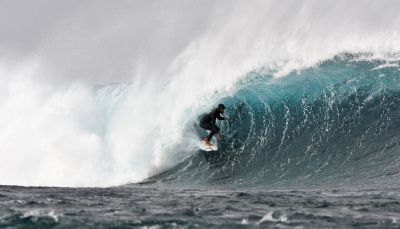
Lanzarote has become home to surfers from all over the world and a source of pride for the locals. Recently, the international online media Surfline - a repository of reports and data on this sport - has described a wave caught by the local athlete Manuel Lezcano in the right area of La Santa as "out of this world".
Also, during the past month of October, the island Council approved unanimously to declare the waves of Lanzarote as a natural and sporting heritage.
Hawaii's Pipeline, -the most famous in the world-, Tahiti's Teahupoo, -the most dangerous-, or others in Indonesia have been some of those compared to those recorded on the island. Although the Canary territory has nothing to envy from other regions: "The waves of Lanzarote are of a very high quality due to the volcanic breaks", explains Franito Sáenz, who has been enjoying the possibilities offered by the island since he was 8 years old.
Waves that reach excellence
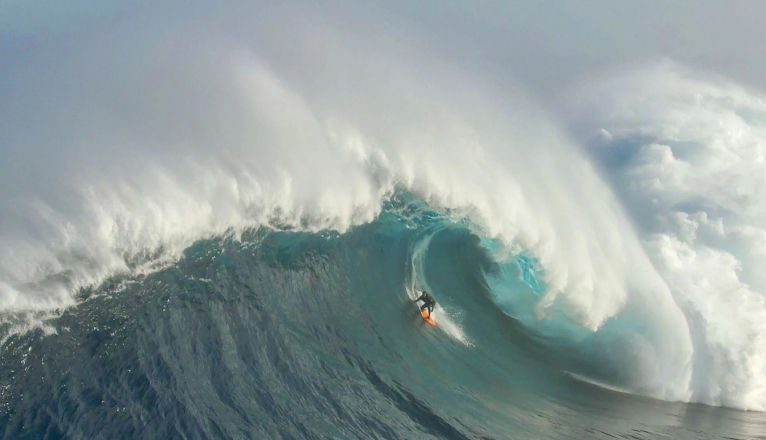
Good temperature and top-level shapes converge on the coast of Lanzarote, which enjoys good conditions for fans of this practice almost all year round and also has waves open to everyone.
"We have top-level waves, such as those of El Quemao or the one Lezcano caught, giant waves with a lot of capacity. But there are also other intermediate ones or those for beginners in other areas of the territory such as Famara, where tourists come every year to practice or have their surfing baptism", details Franito.
However, although this aptitude generates that "in Lanzarote and in the Canary Islands in general there are incredible sports courts to create good professionals", it does not have to directly affect the profile of a surfer, according to the athlete, since "now everyone moves and travels a lot to train in the best places".
Beyond that, the maritime quality of the archipelago can sometimes be counterproductive for the locals: "There are surfing championships around the world that are held on sandy beaches with mediocre waves, and there the Canary Islander sins of quality and is not able to stand out as much as others from the northern peninsula, who are used to surfing waves of a lower rank".
The outermost region, an obstacle to professional practice
But this is not the only complication faced by fans of this sport in the islands, since from here building a professional career becomes more complicated.
Sáenz explains his own example. He started surfing at the age of 8 - he is currently 46 - in Puerto del Carmen accompanied by a buggy "because I saw the first surfers arriving in the area in those years and I was curious".
Although he tried windsurfing, -the sport par excellence in his family, since all his brothers were dedicated to it-, he was drawn to the waves, and at the age of 15 he began his professional career, which would last until he was 25.
"I tried to live the dream of every surfer and competed in championships all over Europe", says the surfer, among which he managed to stay in the top 20 of the European Surfing Championship for several years and was placed as champion of the Canary Islands in 2006-2007.
After that, he was lucky enough to "have a good sponsorship" with the Quicksilver brand, which allowed him to access training camps in Australia and Morocco, but most of the money came out of his pocket.
"The events I attended were in France, Portugal, the Basque Country..., so I had to pay for plane, car, tolls and registrations, among many other expenses", which were largely offered by the savings made during the months of unemployment, where he worked as a store clerk or bellhop.
The disadvantage compared to other competitors from other areas of Spain is that "they could rent a van and go by road to the championships, but in the Canary Islands you were very limited", he explains.
The growth of brands, one more obstacle
Although at an institutional level this situation "has improved, because there is a quarry that they are supporting and many young people are managing to move", Sáenz comments that dedicating oneself to professional surfing continues to be complicated.
Those who have managed to "move quite well" represent a minority, and competition between brands aggravates this situation: "The issue of sponsors has not improved much since then, since the firms that are dedicated only to surfing have many competitors, because now anyone can launch a line on this discipline... Before there were 4 and now there are 1,000", he indicates.
From competitions to teaching
This amalgamation of issues led Sáenz to disassociate himself from the championships... But not from surfing.
At the age of 25, after working in Sopelana (Basque Country) in one of what was then one of the first schools in northern Spain, he realized that he liked teaching.
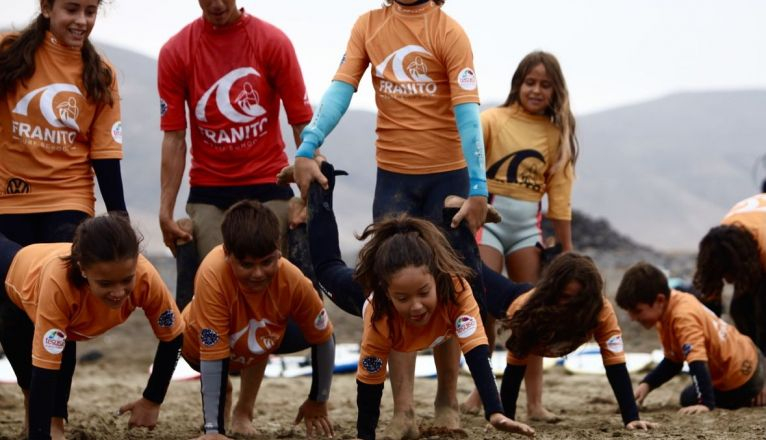
Therefore, upon returning to Lanzarote - where there were only some schools that worked with tourists - he set up Franito Surf School, the first school in the Canary Islands aimed at children.
"I tried to transmit everything I had learned in my competitive career and, little by little, I extended the classes until today, I work with groups of all ages. Since 2021 I have been living off it."
Quemao Class, a championship only for the best
In addition to his teaching corner, Sáenz is also one of the organizers of the Quemao Class, one of the most outstanding competitions in the Canary Islands around surfing and bodyboarding, which has the peculiarity of not taking place on specific dates, but only starts when the best wave conditions occur.
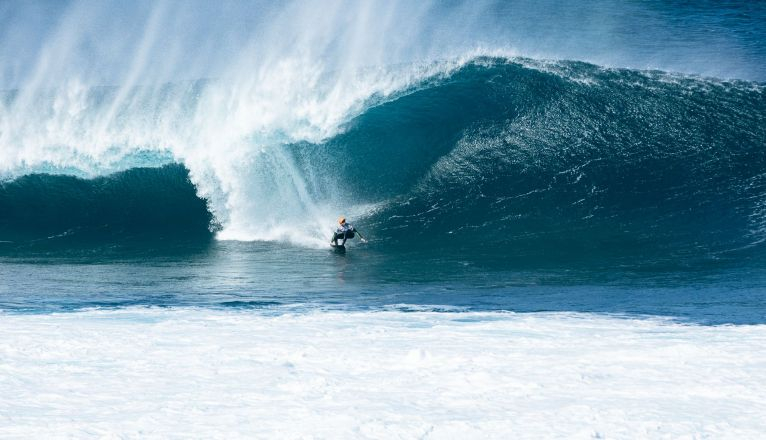
In this championship, 32 surfers and 32 selected bodyboarders face the wave of El Quemao in La Santa.
This wave, which is among the best five in the world in terms of tubes, is characterized by its high quality and danger: "It breaks at very shallow depth and leaves you very little space to paddle, stand up and access the tube, all with the addition of being very close to the rocks, which means that you have to be very good technically to surf it", says the professional.
Despite this high risk, "the sensation and adrenaline it gives is difficult to describe", a fact that explains why there are many athletes worldwide who want to face the challenge of El Quemao.
Growing in the promotion of surfing, an outstanding task
This event, in the opinion of its organizer, has contributed to alleviate the limitations of the Canary Islands regarding the surfing industry, contributing to the growth, not only of the arrival of athletes, but also of experience tourists.
Sáenz indicates that there are numerous people who come "because they want to know the town of El Quemao and see the wave up close, regardless of whether they are going to surf it or not".
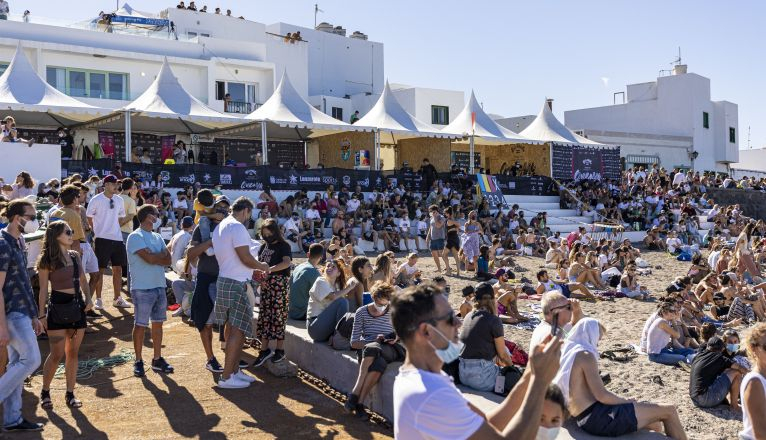
The Quemao Class, likewise, has also helped local professionals to overcome the obstacles posed by insularity, "having the opportunity to fight against renowned surfers, launch themselves and get better sponsors".
For all this, the surfer indicates that the island has to take advantage of this pull and "grow much more in this issue", with the installation, for example, of information panels in coastal areas about the types of waves that occur, to promote "a claim that tourists already include in their itinerary of visits".
"The waves of Lanzarote are a theme park. All the surfing areas I know, at some time of the year, are overcrowded: either in summer with beginners or the rest of the year with professionals. We have gone from having less than ten surfers in Puerto del Carmen when I started, to thousands of people interested in surfing, and we have to take advantage of it", concludes Sáenz.


