
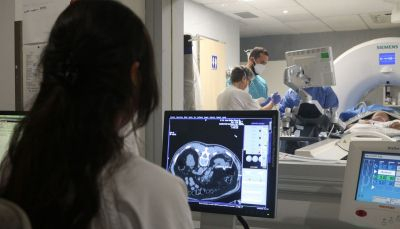
The Doctor José Molina Orosa University Hospital has incorporated microwave thermoablation into the Radiodiagnosis Service of the hospital center, a new precise and minimally invasive technique that allows treating certain tumors without the need for surgery and preserving the affected organ, and that allows a faster recovery of the patient, with a hospital stay of just 24 hours and minimal pain.
This technique, performed by the Radiodiagnosis service, has been successfully practiced in two patients. Both cases, which have had a fully satisfactory evolution, have addressed two kidney tumors with curative intention in patients aged 85 and 52.
This procedure, which until now has only been carried out in the reference hospitals of the Canary Islands, allows treating the tumor in a localized way and preserving the organic function of the patient with a lower risk than conventional surgery.
Microwave Thermoablation
Microwave thermoablation is a very precise therapeutic option for the destruction of these tumors, the procedure does not require an operating room, it is performed in a radiology room and requires an anesthetist for patient sedation, monitored at all times, the nursing team and the diagnostic imaging technician. The percutaneous intervention consists of introducing a needle into the tumor guided by images from computed tomography (CT).
This needle emits microwaves that cause the water molecules in the tissues to heat up until they reach a temperature above 60 degrees, which destroys cancer cells in a very short space of time.
From the Ministry of Health they point out that this type of procedure can be applied to tumors of the liver, lung, bone and in benign breast lesions. The Radiodiagnosis Service of Molina Orosa is committed to incorporating innovative and less invasive treatments into its healthcare activity that improve the quality of life of patients and avoid transfer to referral hospitals for this type of pathology.
In this line of work, since 2020, the service has performed more than 30 interventions for the treatment of benign thyroid nodules by radiofrequency, another of the thermoablative techniques, with a notable percentage of success. In fact, one year after the intervention, an average reduction of 85% of the initial size of the nodule and a high degree of recovery and patient satisfaction is observed.


