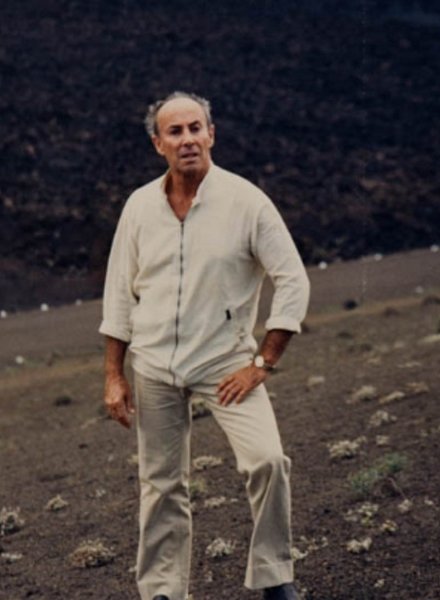
The multidisciplinary artist César Manrique Cabrera (1919-1992), the greatest intellectual and artistic reference of Lanzarote, would turn 107 this Friday, April 24, with a legacy that has survived him and with a discourse in defense of the environment that marked the island's course.
Born in Arrecife in 1919. Manrique studied at the San Fernando Academy of Fine Arts, in the city of Madrid, where he lived for almost a decade between 1945 and 1954. In those years, in addition to exhibiting his painting, he joined the Spanish informalist movement.
In the year 1964, after his stay in the Spanish capital, he moved to New York City. At that time he held three artistic exhibitions at the Catherine Viviano gallery.
Upon his return from the United States, César Manrique returned to his native island, where he carried out different artistic projects in which he made art converge with his conversation with nature, with a marked discourse in defense of the landscape and the uniqueness of Lanzarote.
As part of his legacy remain today such special works as the Jameos del Agua, the Mirador del Río, the Cactus Garden, or the Montañas del Fuego center in Timanfaya, among others.
In those years, besides promoting a movement that combined different plastic arts with the volcanic landscape of Lanzarote, Manrique fought against mass tourism in an active way. In his activist capacity, the man from Arrecife even lay down with the mechanical shovels during the construction of a hotel on Los Pocillos beach in Puerto del Carmen, in Tías.
The Lanzaroteño warned in 1985 in the manifesto Momento de Parar that tourist and urban growth was leading Lanzarote to "suicide". Furthermore, he was one of the driving forces behind the Lanzarote Island Planning Plan, in which 250,000 tourist beds were declassified and which led to the moratorium in the year 2000, which suspended the granting of new municipal construction licenses.
His speeches and public statements still resonate today in citizen demonstrations against mass tourism and in defense of Lanzarote and its landscapes.