
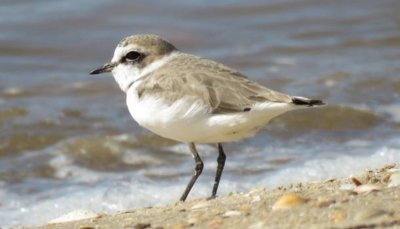
The Kentish plover (charadrius alexandrinus) is a wader, that is to say, it lives in the coastal zone, and is among the vulnerable species of the Canary Islands and has already begun its breeding season this April.
This animal is a representative species of the islands, it has black legs, a white belly and a grayish back, while its head is white, black, and cinnamon.
This bird has the peculiarity that it usually places its nest near the sea, taking advantage of small holes in the sand to place its eggs and then cover them with shells.
This species suffers the consequences of the anthropization of beaches and its population has been decreasing. According to the Association for the Conservation of Canarian Biodiversity, it is one of the "most threatened" species on the islands and a few years ago there were only 135 pairs in the entire archipelago.
Despite Fuerteventura being the island that hosts the largest population of Kentish plovers, it also exists in La Graciosa, Lanzarote and the Islote de Lobos. While in Gran Canaria there is only evidence of one specimen and in Tenerife it has been extinct for years, according to this same source.
In June 2023, Playa Honda canceled the San Juan events on the beach after receiving negative technical reports from the Ministry of Ecological Transition of the Government of the Canary Islands, from the Nature Protection Service (Seprona) and from the Cabildo of Lanzarote due to the damage that bonfires could cause to the Kentish plover and its reproduction process.
A user on social media has recalled the importance of dogs not going unleashed on beaches where the Kentish plover nests and of preventing the dog from running after these birds because they can, out of fear, abandon their chicks.


