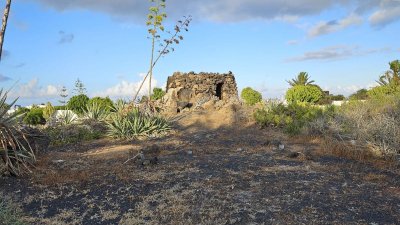
Ecologistas en Acción Lanzarote understands the Taro as a heritage element that structures the landscape with diverse values, as they are constructions linked to the economic exploitation of the rural environment during the development of agricultural, fishing, or livestock practices, but also for surveying the space or as storage and shelter. The surveillance of the territory can have livestock purposes, of contracted labor, or protection against centuries of raids.
On the other hand, the association, whose aims also include the protection of the island's heritage, points out the ethnographic value of the taros. These are associated with multiple variants of the dry stone construction system, characterized by obtaining stability without binding material. This unique construction system of the taros, the exclusive material it employs, the circular-shaped plan, and the dome roofing by approximation of courses, maintain the memory and a close link with the most remote stages of Lanzarote's population.
Ecologistas en Acción regrets that, even though UNESCO has recognized the Canary Islands' ethnographic dry stone constructions as Intangible Cultural Heritage of Humanity and they are well documented, local administrations, whose duty is to guard and safeguard Lanzarote's common cultural heritage, appear not to recognize or value the testimony of the methods and practices used and materialized in the Taro Atalaya.
Therefore, and in order to ascertain whether or not the Haría City Council has followed the appropriate administrative steps for the protection of the Taro Atalaya, Ecologistas en Acción Lanzarote has requested the complete file of the corresponding urban planning license from the Haría City Council and urges said council and the Cabildo de Lanzarote to take responsibility for protecting and conserving the Taro Atalaya in Charco del Palo.



Add La Voz de Lanzarote as a preferred Google source.
Stay informed with the latest current news.