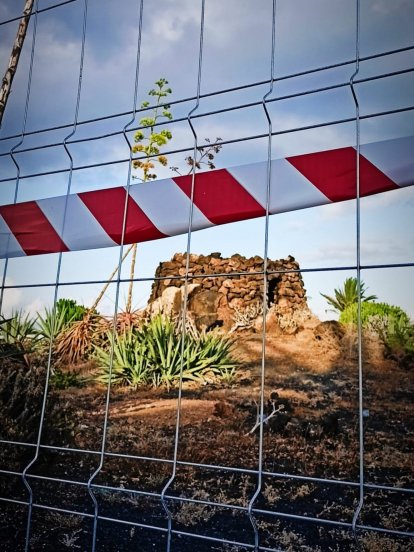
The Pueblo Maho organization has denounced the "possible and imminent demolition" of the taro, commonly known as Atalaya, located in Charco del Palo, on the coast of Mala.
The taros are part of the architectural record of Lanzarote's rural landscape, along with many other elements such as, for example, walls, fences, gavias, nateros, travesaños, sises, corrals, or gambuesas. In the construction of all of them, only the stone from the immediate surroundings is used with the aim of forming their structure, and the dry stone construction technique is employed. It is a traditional and universal construction procedure that prioritizes the economy of available resources, contributing to the environmental conservation of the places where it is built.
Given the relevance of this construction technique in the Canary Islands, in 2024, the “Construction and techniques of the art of building dry stone walls” was declared Intangible Cultural Heritage of Humanity by UNESCO, considering its extensive use and the historical imprint with which it shapes the island landscapes.
A taro on agricultural land, fishing land, or on a hill is not only a construction unit, but also constitutes a testimony of methods and practices used by the population in their coexistence with the rural environment.
Likewise, Pueblo Maho recalls that "it is a testimony of the way of relating to the territory and of community work." Over time, it has been used as a tool shed, food storage, cheese curing, fish drying, leather treatment, a place to watch livestock or day laborers, as is the case with several examples from central and northern Lanzarote. They were also built to survey the coast, for rest during agricultural work or hunting trips, among other uses.
"We know that UNESCO recognition alone is not enough to preserve the existing ones in Alegranza, Montaña Clara, La Graciosa, and Lanzarote, which is why the Pueblo Maho organization, in its effort to recognize the heritage value of this element, urges the administrations responsible for the protection of historical elements to adopt the necessary precautionary measures to preserve the Atalaya taro of Charco del Palo. It is equally necessary to inventory and catalog those that remain, as several are at risk of disappearing," they argue.
A taro, in addition to the purpose for which it was built, its presence in the landscape sustains the capacity to evoke the history of the place, in this case, it brings to mind the attacks from the outside that Lanzarote endured for centuries. This taro is linked to the vernacular cultural tradition that forms the collective identity of Lanzarote.
It is possible that if urban planning permits were granted, administrations would be "content" to leave "the taro embedded" in a garden area or on the edge of a plot. "However, not only must the conservation of this element created as material heritage be guaranteed, but also the landscape that has been created, endow it with the landscape heritage in which it was conceived and is found, in order to recognize it in its environment, in the atmosphere in which its useful life developed," they point out.
This example of anonymous architecture and the existing need when this heritage element was erected, built with the ancestral dry stone technique, could go unnoticed by those who in their dedication only see urban land, "hence the need for administrations to have specialized personnel in the management and guardianship of cultural heritage, which includes cataloging, informing, and monitoring so that we citizens are not deprived of our common heritage or the memory that unites us."



Add La Voz de Lanzarote as a preferred Google source.
Stay informed with the latest current news.