
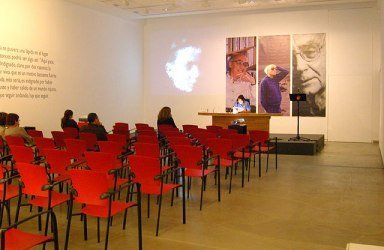
Canarian writer Alexis Ravelo will give a conference next Thursday, May 25 at 8:00 p.m. in the José Saramago Room of the César Manrique Foundation, in Arrecife. The talk entitled "From the muse to the table. An approach to novelistic composition", is part of the Archipelago Forum and will be where Ravelo will present "his working methods in novel writing: from the initial idea to how he composes the novel", according to the Foundation. In addition, at the end of the event, the author will be available to the public to sign his books.
Alexis Ravelo, who was born in Las Palmas de Gran Canaria in 1971, is a writer especially prominent in the field of noir novels, short stories and micro-stories. He has published more than twenty titles, including texts dedicated to children and young people, and is the author of several theatrical shows and audiovisual scripts.
Several of his noir novels have been translated into French and published, in addition to Spain, in Latin America. These include La estrategia del pequinés (2013), awarded the Hammett Prize for the best noir novel published in 2013; La última tumba (2013), for which he received the XVII Ciudad de Getafe Noir Novel Prize; and Las flores no sangran (2015).
In recent years he has temporarily moved away from the genre by publishing La otra vida de Ned Blackbird (2016), a short novel that oscillates between the fantastic and the intimate; and Los milagros prohibidos (2017), which tells the epic of the Republican resistance fighters on the island of La Palma after the coup d'état of 1936, known as the Red Week of La Palma.


