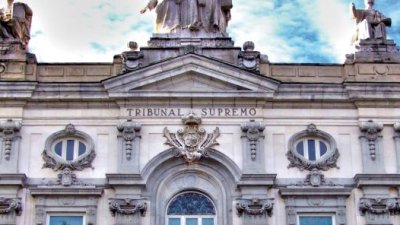
The Supreme Court has upheld a ruling that endorsed the disciplinary dismissal of a Banca March executive, considering it proven that he "altered the collection" of the commissions that corresponded to him for the sale of several plots in Lanzarote, "to hide them from the bank and defraud the Treasury."
The events occurred in 2014, when the appellant was the area director of the province of Santa Cruz de Tenerife and was "closing the sale of four plots in Puerto Calero." According to the ruling of the Superior Court of Justice of the Canary Islands that has now been confirmed, at that time he "induced other employees to commit faults", offering them to put the sales in their name, so that they would be the ones to receive the commissions in their payrolls.
First, this executive approached a worker who had a tax withholding of 16%, compared to the 40% he paid. Thus, he offered to collect the commission in his place and then give him the money, "offering him a share as a profit." However, this employee from the Arrecife-Centro office went to the director of his branch and told him what had happened, "asking for advice on how to reject the offer," since it came from a superior. "The next day he told him that for personal reasons he could not accept it," the ruling states.
Another worker did accept
The executive then turned to another employee in Lanzarote, making the same proposal, "with the argument that it was frowned upon for an area director to receive commissions for sales of awarded assets and that, in order to avoid comments from colleagues, it was better to do it through his intermediation." In this case, the worker did accept and in his payroll for the month of April 2014 "he received an incentive of 29,000 gross euros, of which the income tax was deducted, leaving a net of 19,727 euros." Of that money, he gave 13,653 euros to the area director, "the latter telling him not to spread it to avoid gossip."
However, shortly after the company became aware of what had happened and proceeded to dismiss him, which was appealed in court by the affected party. His appeal was partially upheld in the first instance, but then the Superior Court of Justice of the Canary Islands revoked that ruling and rejected the plaintiff's claims. Now, it has been the Supreme Court who has issued an order, dated November 27, in which it agrees not to admit the appeal for cassation that had been filed against that ruling of the TSJC.
"Proven the facts, the way operated by the plaintiff is nothing more than a deception for the banking entity, offering his subordinate the collection of the commission of a sale of real estate in order to evade the payment of a higher tax," the Court points out, which considers it proven that there was a "machination" by this former executive, "with full knowledge and taking advantage of his position and superiority over the collaborating employee he had."
"The deliberate and conscious purpose of the plaintiff is clear, forgetting his status as head of the area and his ethical behavior with the bank, so the fidelity that the worker must have with the entity is broken," the order adds.



Add La Voz de Lanzarote as a preferred Google source.
Stay informed with the latest current news.