
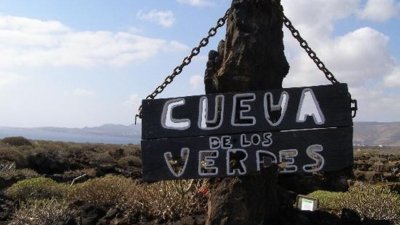
The Contentious-Administrative Court Number 5 of Las Palmas has agreed to dismiss the agreement reached between the Cabildo of Lanzarote and the City Council of Haría to execute the judgment of La Cueva de Los Verdes, since it indicates that the only thing that both parties can agree on is the form of payment, but without modifying the terms of that ruling. That is, that neither the agreement signed in 2016 by Pedro San Ginés -which was never judicially approved- nor the addendum with which it has been attempted to correct now, expressly including the compensation but waiving interest, would be valid.
In this regard, the Court recalls that that "final judgment" condemned the Cabildo to deliver to Haría "as compensation for damages 100% of the income obtained from the sale of tickets to the Cueva de Los Verdes since November 25, 2010" -which was when the Corporation urged the Corporation to abandon this Tourist Center- "and until the restitution of its possession is effective, plus legal interest." And the problem for the Court is now precisely in this last, in the interests.
In the addendum to the initial agreement signed in 2016, which is what both institutions sent to the Court last November for approval, compensation was contemplated, quantifying the amount collected from the sale of tickets at almost 13 million euros, but they agreed not to demand "the legal interests that could have been generated, in order to favor consensus between both entities and its prompt resolution."
However, this is precisely what the Court has rejected. "The parties can only agree on the specific manner and form in which the execution of the final judgment of this Court is to be carried out, being obliged in any case to execute the judgment of February 10, 2015 in its own and exact terms. Hence, the agreement presented cannot be approved when it determines to circumvent the judicial mandate to pay the City Council of Haría the legal interest," the order states, dated December 11.
The order makes it clear that there is a "final judgment" to execute
When the island leadership of Coalición Canaria opposed the approval of that addendum -stating that it was a "disloyalty" to the agreement signed in its day by Pedro San Ginés and the then mayor of Haría, Marci Acuña-, it criticized that the new document spoke of "compensation, damages, interest, etcetera, as if the judgment had been final because the Cabildo lost the appeal, instead of because it was agreed to withdraw it to execute an agreement with which to overcome the judicial conflict." However, the order makes it clear again that that is precisely what must be done: execute a "final judgment."
In this regard, the judge cites different jurisprudence to emphasize that a transactional agreement can only be reached while a lawsuit remains unresolved, but not when there is already a judgment, because that option is not contemplated "in our legal system." Thus, he insists that when there is a judgment it must be "executed in its own terms," "without its compliance being suspended or proceeding to declare the total or partial unenforceability of the ruling, unless there are causes of material or legal impossibility to execute."
In this case, the first agreement between the Cabildo and Haría was reached when there was already a first ruling and the final judgment was about to be issued. At that time, they asked that the "procedure be terminated," appealing to that agreement signed between Acuña and San Ginés, but their claim was rejected, as La Voz reported in its day and as Pedro San Ginés has been denying.
"The coherent and logical thing would have been for the appealing parties to simply withdraw from the appeal, as stated in clause nine of the signed agreement," the Superior Court of Justice of the Canary Islands stated then, which in May 2017 declared the judgment of first instance final, calling the procedural attitude of the Cabildo in this lawsuit "erratic" and confirming the conviction.
In that resolution, the TSJC referred both parties to present the agreement in the execution phase of the judgment, but they never did. Later, after the change of the government group of Haría and already with the socialist Alfredo Villalba in the Mayor's Office, a new negotiation was opened with the Cabildo, based on municipal reports that warned that that first agreement was "harmful" to the interests of the City Council, since it did not even expressly include compensation and only included a "declaration of intentions."
In that document, the Island Corporation committed to invest 6 million euros in Haría in 10 years, although it also pointed out that it would do so "to the extent of its possibilities." And it raised it as an investment plan for the development of the municipality, but at no time did it recognize it as the payment of the compensation to which it was condemned in a final judgment.
Finally, the negotiations concluded with an addendum to that agreement, in which the compensation was quantified, based on what was literally established by the judgment, but with the waiver by Haría of the interest to "facilitate" the agreement, which on this occasion did have favorable reports from the City Council. Later, after its approval by the Plenary of both institutions and after its signature, they sent it to the Court for approval, which was what was not done in its day either, and the response has been that the City Council cannot even waive the interest, and that the conviction of the Cabildo must be fully complied with, being able to agree only on the payment plan.
The amount that the Island Corporation will have to pay could thus increase by several million euros, given the time elapsed since the beginning of this lawsuit, which began in the midst of the confrontation between the former president of the Cabildo, Pedro San Ginés, and his former party colleague and then mayor, José Torres Stinga, councilor now of the Municipal Platform of Haría. Currently, despite the antagonistic nature of their positions -Torres Stinga continued to defend the full execution of the judgment and San Ginés insists that there is no judgment to execute-, their two parties are governing together in the municipality, after having presented a motion of censure against Alfredo Villalba, using as an argument that addendum to the agreement of La Cueva. In the Plenary of Haría, it was the divided votes of CC that allowed the addendum to go ahead, since only one councilor followed the mandate of his party and voted against, while three others abstained and one voted in favor.



Add La Voz de Lanzarote as a preferred Google source.
Stay informed with the latest current news.