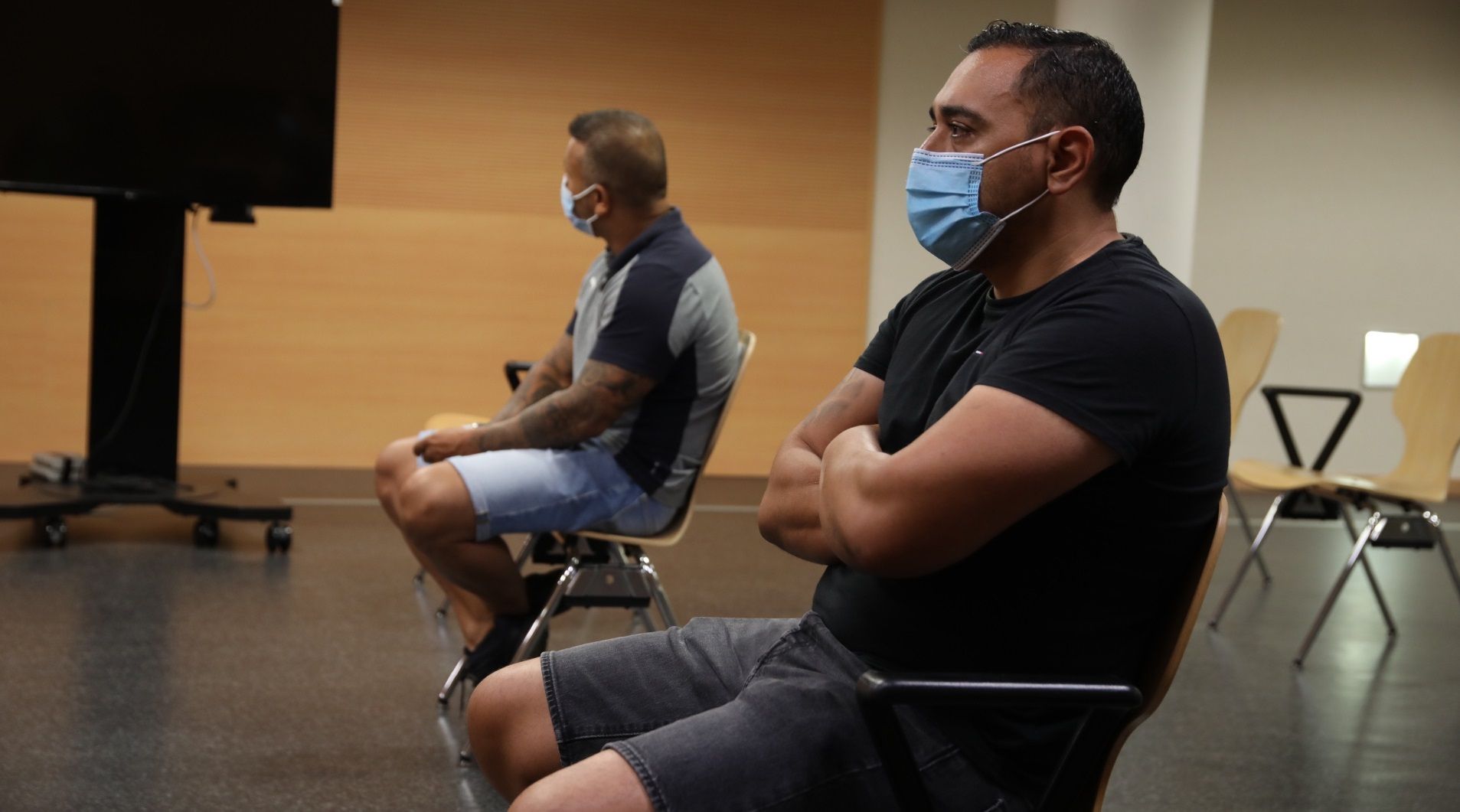
The heads of a cannabis club in Arrecife refused to testify this Tuesday in the trial in which they face a request for 7 years in prison for a crime against public health and another of illicit association, thus avoiding facing questions from the prosecutor. However, both have made use of their last turn to speak at the end of the hearing.
“What I want to say to the prosecutor, since he is going after us...”, Luis Fernando R.M. began saying in an annoyed tone, until the magistrate interrupted him, to indicate that he should address the Court.
In his speech, the defendant has alleged that he and his partner were unaware of the rules, and has questioned the accusation against him. “I am being convicted as if I had killed or sold cocaine. And that cannot be”, he stated in his final plea. “I am not a criminal, I do not sell cocaine”, he insisted.
According to what he stated, they created the El Tabaquito Terapéutico association “without knowing exactly the rules that exist when one starts a business”. In its statutes, they indicated among the purposes of the association “the study and application of cannabis for therapeutic purposes”, “avoiding the danger to the health of its users inherent to the illegal cannabis market, through its activities aimed at preventing the risks associated with its use” and “promoting social debate on the legal situation and that of its consumers”.
However, the Prosecutor's Office has emphasized in its final conclusions that “it has not been proven in any way that they were dedicated to the purposes indicated in their statutes”, since they have not provided any evidence of this at trial either. “The only purpose, which they obviously do not include in their statutes, was to distribute marijuana and hashish in exchange for money. Sell drugs to anyone who has a card ”, he stressed.
"Fines teach you to learn"
“When you start a business, fines teach you to learn”, the defendant stated, who has defended that he does not know “exactly what the laws are for each thing”.
“We came here to work. We have no criminal record, we don't hurt anyone”, he maintained. Regarding the fact that several users were intercepted leaving with marijuana and hashish that they had bought inside the premises, he alleged that they always indicated that they should consume it inside, which is the only thing that would be allowed in a legal association with authorization. “I can't put a policeman at the door to search”, he alleged.
In this regard, the prosecutor has explained that for such an activity to be legal, it must have very strict requirements, such as being carried out with a “closed group” of people who know each other and who are already “regular consumers”, with a “shared consumption” and “without publicity”, which he considers does not occur in this case. “What they were doing was promoting drug use”, he pointed out, noting that they even advertised on the internet and had 430 members.
“They sold drugs to anyone who had a card. It was not required that they be regular consumers, nor was it a closed group. Nothing was required. And the only requirement regarding age is scandalous”, he questioned, recalling that the statutes established that in order to be a member and be able to access the premises, one had to be “over 14 years of age”.
“They cannot maintain that they did not know that selling drugs to other people in exchange for money is a crime”, the prosecutor emphasized, anticipating the argument that the defendants later made.
“If it were on the street, there would be no doubt that we are facing a crime against public health”, he highlighted.
"We are not getting rich"
“All I do is work since I arrived in this country and try to get ahead. We are not getting rich. We take a salary for each one and we work 365 days a year”, Luis Fernando R.M. defended. “I get to the end of the month with the account in the red. Where is the profit?”, he asked, stating that they put a bar in the premises to sell “drinks and rolling papers to survive”. “I don't understand. I'm not becoming a millionaire”, he reiterated.
In addition, he assured that in Lanzarote there are “40 associations” of cannabis and has questioned that “only four have been registered”. “They caught one with more”, he pointed out, stating that in that case the sentence was less than two years in prison. “They are asking me for 7 and they want to give me a fine of I don't know how much”, he added.
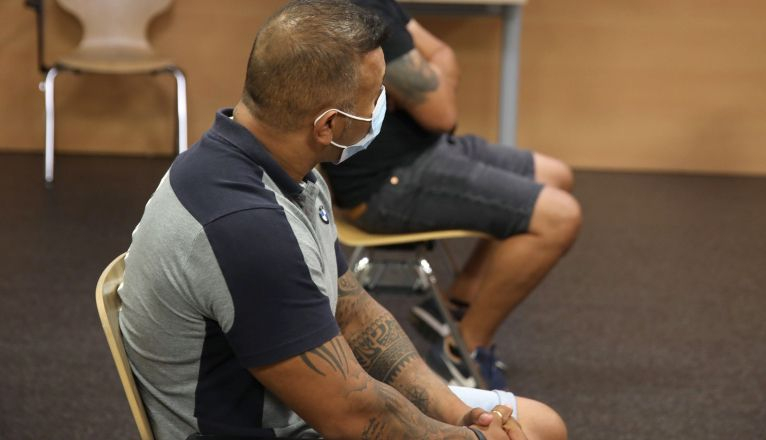
The other defendant, Octavio Alexander S.R., maintained a similar speech in his last turn to speak, referring to the expenses they faced of “rent, water, electricity, internet, management...” “We became self-employed”, he added.
Regarding what the police found when searching the premises, he stated that the cash “did not reach 1,000 euros” and that “there was marijuana”, but because it was “a provision for about six months”. “We had to cultivate it and keep it stored. It's not like Coca Cola, which runs out and you say: Send me a box. Coincidentally, we had it there the day the search arrived”, he stated.
In total, the agents found more than 4 and a half kilos of marijuana, 108 grams of hashish and almost 4 more kilos of cannabis extract and cannabis resin oil.
Regarding this, the prosecutor has stressed that by refusing to answer questions, the defendants have not given “explanation” to the presence of hashish in a club that, if legal, could only allow the consumption of marijuana. And he has also insisted that they “lacked any type of authorization” and that the number of members and the drug found confirm that they were engaged in “indiscriminate sale”.
"A perfectly legal association"
As for the defendants' lawyers, they have defended that “the crimes have not been proven”, with special emphasis on that of illicit association. In fact, one of them has even asked for the trial to be suspended, alleging defenselessness and arguing that this crime was included for the first time in the Prosecutor's Office's indictment, with the investigation already completed.
In addition, he has again asked for the hearing to be suspended due to the absence of two witnesses who he has defended were key, to which the prosecutor has responded that they were not defense witnesses but prosecution witnesses, specifically two police officers. And although they have not been able to appear, seven others who participated in the operation have done so.
Afterwards, after raising a protest for not suspending the trial, he has asked that in case of conviction, undue delays be applied as a mitigating factor, due to the time it took to set the hearing for this case, which began in 2018.
In addition, he has also questioned that the Prosecutor's Office requests the maximum penalty for both crimes, and has alleged that a maximum of three to six months should be imposed for one of them and one year for the other, in case of conviction.
In any case, he has insisted that there was no “business”, that it was “a perfectly legal association” and that “in some cases the cost price was charged to continue replenishing the substance”.
Both lawyers have also alleged that their clients informed the members that they could not take the marijuana out of the premises. “They have been betrayed by the behavior of some of the members”, one of them has alleged, after listening to several witnesses who were intercepted by the police leaving the club with drugs.



Add La Voz de Lanzarote as a preferred Google source.
Stay informed with the latest current news.