
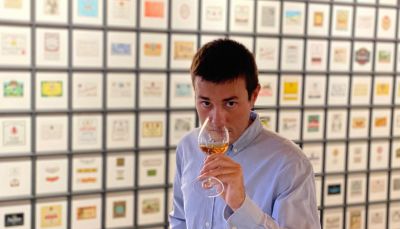
Lanzarote winegrower Jorge Rodríguez Alonso has just been elected, by consensus, as the new director of the Lanzarote Wine Regulatory Council, thus taking over from the winery sector.
In an interview with Radio Lanzarote, Rodríguez explains the good moment that the world of wine is experiencing on the island and how many young people are returning to work in the fields, although the water problem persists.
He also highlights the essential role of La Geria in defining the island's landscape and anticipates the Cabildo's plans to promote traditional cultivation in socos.
- Good morning, how has it been to take that step forward to lead the Regulatory Council?
We came from a legislature governed by the winery sector and now it was the turn of the winegrowers, and by consensus among all, it was decided that it should be me.
- What is your analysis of the current situation of Lanzarote wine?
The cultivation of vines on the island of Lanzarote is now at a time when it is beginning to be profitable. A reasonable price for grapes has been reached. The wines have also been positioned very well thanks to a joint effort by the wineries and the Regulatory Council.
We want to continue these guidelines so that what we have been doing for 300 years, this wonderful viticulture on this wonderful island, continues to survive in the future.
"We have gone from having x wines to having top wines"
- There has been a transformation in recent years…
Lanzarote wines have taken a turn in recent years. We have gone from having x wines to having top wines. Many people tell me that Lanzarote is the little Burgundy.
We are doing things well, because they are starting to recognize us not only here, but also abroad. That's when you realize that Lanzarote wines have an increasing journey.
- The Cabildo has focused, when presenting the special plan for La Geria, on maintaining and recovering the traditional viticulture of the socos…
It is true that they want to reward this traditional cultivation, which is the type of viticulture that makes us different, because it is unique in the world. Everything that is traditional systems will try to have a distinctive. In La Geria, they continue to work as they did two centuries ago.
In La Geria and other parts of the island there is a lot of abandoned cultivation. Everything that is tried to be developed so that we can recover vineyards and grow little by little is welcome.
"Cultivation in zocos must be rewarded"
- Although linear plantations are more profitable than holes…
The traditional cultivation system, from Masdache to La Geria, needs incentives. Producing a kilo of grapes in that area has nothing to do with doing it with a linear crop.
We must reward the cultivation in socos, which has defined the landscape of La Geria, and has allowed us to enjoy the sunsets in La Geria.
"Without water it is impossible for a plant to develop. It hasn't rained at all in Tinajo"
- Has the abandonment of land and the lack of generational change been reversed?
In recent years, not only has the abandonment of farms stopped, but little by little some are being recovered. I don't want to say with this that a huge amount of vineyard is being recovered.
I know quite a few young people who are starting in this world, but it's complicated. Working in the countryside is very hard, but thanks to the price paid for grapes today and the aid given, it seems that it is becoming more attractive for the younger generations as a means of livelihood.
- Are we in luck for the rain that has fallen in recent days?
The big problem with agriculture in Lanzarote is the scarcity of water. Without water it is impossible for a plant to develop. It is true that it has rained these days, something has fallen in La Geria and Masdache, and in the north, but there are areas, such as Tinajo, where it has not rained at all.


