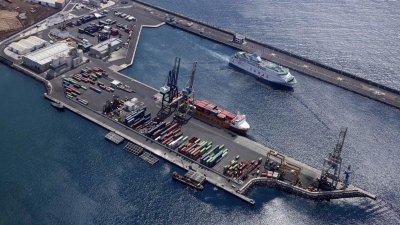
The Council of Ministers has declared of Public Interest and established Public Service Obligations on the lines that connect Huelva with the provinces of Santa Cruz de Tenerife and Las Palmas, thus joining the protection already enjoyed by connections with Cádiz.
Now, the bidding documents for these two new lines will include that Public Service Obligation as the main character, which will mean, in practice, that these ships "must pass compulsorily through Lanzarote on their Península-Canary Islands route, contrary to what happens until now, where that stopover was only incentivized, remaining at the mercy of the acceptance of the shipping companies", said the senator for Lanzarote and La Graciosa, Manuel Fajardo Palarea.
"When the bidding for these maritime services takes place, a maritime connection without transshipments will be offered to the population that must travel by sea to Lanzarote from the Península. This maritime connection will also allow the use of this line by drivers of cargo vehicles and tractor units without the need for transshipments," they add from the PSOE.
"This advance does justice to an old demand of the Lanzarote business community, expressed in recent years through the Chamber of Commerce of Lanzarote and La Graciosa," recalls the party, which explains that the islands of Fuerteventura and La Palma will be "in the same situation."


Add La Voz de Lanzarote as a preferred Google source.
Stay informed with the latest current news.