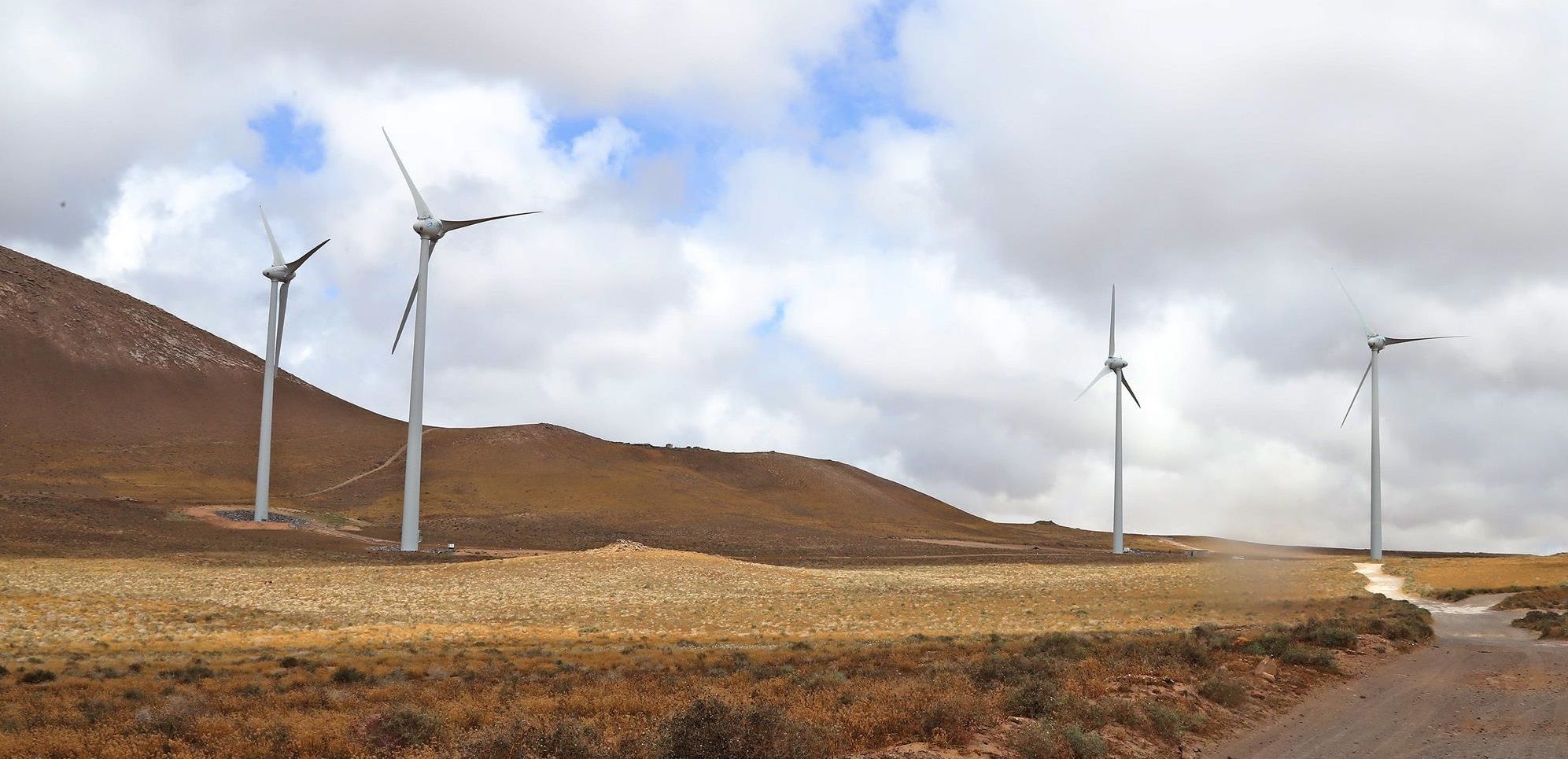
The Canary Islands generated 15.2% more renewable energy in 2021 than in 2020, reaching 1,603,393 megawatts (MW), mainly because wind generation reached its annual production maximum with 1,307,645 MWh, which accounted for 16.2% of all Canarian electricity.
According to a statement issued by Red Eléctrica de España (REE), these data are derived from the progress of its annual report on the electricity system, which was presented at an event this Friday.
The maximums reached in the Canary Islands have allowed renewables to already cover almost 20% of the total energy mix of the archipelago, which reflects the progress of the energy transition in the region, according to the data in the document presented.
However, the generation mix in the Canary Islands continues to be led by combined cycle, responsible for 42.6%, followed by diesel engines (21.3%), wind power (16.2%) which is ahead of steam turbines (13.8%), and the photovoltaic solar generation structure (3.2%), which exceeds gas turbines (2.5%).
Regarding installed capacity, in 2021 it increased by 2.6% thanks to the commissioning of 79 new MW of renewable power, 69 MW of wind power and 10 MW of photovoltaic solar.
In this way, green energies already represent 23.4% of the Canarian generating park, which already reaches 3,125 MW in service; combined cycle is the technology with the highest installed power.
This growth of renewables in the Canary Islands has been recorded in a year in which the demand for electrical energy increased by 1.4% compared to 2020, and in which the consumption of the archipelago has represented 3.1% of the national total.
For REE, 2021 has been "a year of renewable production records in the records of maximum renewable production recorded at the island level, with wind power being the technology that has broken its own records on the most occasions".
The ecological transition is more necessary today than ever. It is the only way to achieve energy sovereignty in Europe and is an indisputable lever for the recovery ahead (Beatriz Corredor, president of REE)
According to Corredor, they have been working on this path for years and the 2021 data are an "unequivocal sign" that they are moving forward "at a good pace and with a firm step." "And an essential instrument to promote this transition will be the 2021-2026 Electricity Planning, which will be approved soon and will allow us to comply with the path set by the PNIEC (National Integrated Energy and Climate Plan)," he added.


Add La Voz de Lanzarote as a preferred Google source.
Stay informed with the latest current news.