
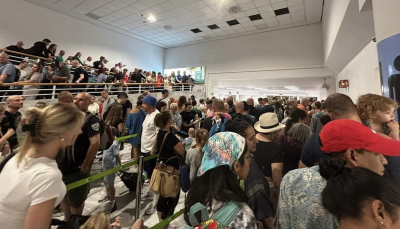
On October 12, the airports of the European Union will premiere a new entry and exit control system (EES) for citizens who are not part of the European Union.
The president of the Chamber of Commerce of Lanzarote and La Graciosa, José Valle, expressed his concern about a system that could cause "serious collapses" at Lanzarote airport, which receives 1.6 million Britons a year.
The new system will store the data contained in the travel document of non-EU passengers, as well as the date and place of each entry and exit.
In addition, it will also record the facial image and fingerprints of these passengers.
What is it for?
The EES is an automated computer system that allows electronic registration of nationals of countries that are not members of the EU and who travel for a short stay, each time they cross the external borders of any of the European countries that use the system.
The new system will be able to identify people who have exceeded the authorized period of stay and provide reliable data on entries, exits and refusals of entry.
In addition, it will be able to effectively combat fraud in identity through the collection of biometric data.
Who does it affect?
For the purposes of the EES, a "national of a non-EU country" means any citizen who does not have the nationality of any country of the European Union or the nationality of Iceland, Liechtenstein, Norway or Switzerland, which are part of Schengen.
"Short stay" means any stay of up to 90 days within any 180-day period. This period is calculated as a single period for all European countries that use the EES.
Despite fears in Lanzarote, the EU believes that "this system modernizes border management and improves the traveler experience."


