
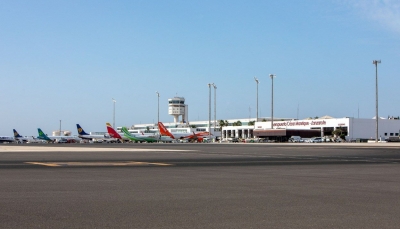
César Manrique Airport in Lanzarote has renewed its certification from the Airport Carbon Accreditation (ACA) program of the Airports Council International (ACI), earning it a Level 2 "Reduction", after meeting the necessary requirements once again.
In total, nine Aena airports are accredited in this program, representing 70% of passengers and more than 90% of the emissions from the airport network.
Among other actions, to obtain the certification, the Lanzarote airport has calculated the annual carbon emissions and described the sources of CO2 emissions within the operational boundary of the airport operator; that is, those that come from sources or processes that are owned or controlled by Aena (direct emissions, such as those from fossil fuels, or those associated with electricity consumption).
This calculation has been verified by an independent entity, in accordance with the program's guidelines, which is aligned with Aena's Net Zero objective.
Aena sources emphasize that this accreditation "demonstrates its continuous commitment to the management of carbon emissions and the improvement of its environmental practices. Accreditation in the program reflects the effort made to reduce its environmental impact and move towards broader sustainability goals."
Carbon Management Plan
As part of its strategy to address the challenge of climate change, Aena has implemented a Carbon Management Plan in most of its accredited airports.
This plan includes a series of measures aimed at reducing greenhouse gas emissions, optimizing energy use in buildings and infrastructure, and decreasing the consumption of fossil fuels.
Additionally, they have developed a Stakeholder Engagement Plan, which includes actions to reduce emissions from aircraft, handling equipment, and other third parties operating at Aena airports.
The Airport Carbon Accreditation program is the only global carbon management certification initiative for airports with institutional support.
This program independently evaluates and recognizes airports based on their progress in the comprehensive management of their greenhouse gas (GHG) emissions, through six levels of certification: "Inventory", "Reduction", "Optimization", "Neutrality", "Transformation" and "Transition", the latter two aligned with the Paris Agreement.
Carbon neutrality is part of the main strategic objective included in Aena's 2021-2030 Climate Action Plan, which includes actions for the mitigation of the effects of climate change. These actions will allow Aena to achieve carbon neutrality in 2026, on the path towards achieving Net Zero in 2030.


