
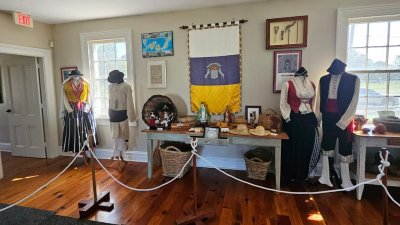
When one walks through the Los Isleños Museum, in St. Bernard Parish, Louisiana, one is not only touring old houses; one is traversing centuries of history, memory, and cultural resistance. What began as a Spanish colonial project in the 18th century ended up becoming one of the most unique communities in the Canarian diaspora: the Isleños, descendants of those 2,000 men, women, and children who set sail for the unknown between 1778 and 1783.
The Journey: From Promise to Survival
Spain, after inheriting Louisiana from the French, needed to repopulate it with loyal, Catholic, and hardworking subjects. The Canary Islands offered that profile: peasants accustomed to the heat, fishing and cultivation, resilient and deeply religious. The Spanish Government offered land, tools, and maintenance to those who agreed to emigrate. What they did not mention was the human cost: weeks of crossing, diseases, shipwrecks, and the feeling of being pieces of an imperial strategy.
The passenger lists, partially preserved today, speak of entire families: men registered as soldiers or farmers, women and children embarking for a place they did not know. Each name represents a story of uprooting and courage.
Settlements and Adaptation
The first islanders were sent to places like Galveztown, Barataria, Valenzuela, and San Bernardo. Not all survived. Hurricanes, floods, and diseases meant that only a few nuclei, such as that of San Bernardo, endured. There, among the swamps and cypresses, the Canarians built houses of mud, wood, and Spanish moss, cultivated rice, corn, and fruit trees, and adapted to the climate and fauna of the Mississippi Delta.
Over the generations, these descendants mixed their heritage with the African, French, and indigenous cultures of the environment, but retained their own stamp: Isleño Spanish, a linguistic variant that preserves turns of phrase from the 18th-century Canarian speech and that today is dying out, spoken by only a few elderly people.
Living Culture and Inherited Pride
The Los Isleños Museum, which today stands on the land where the first settlers lived, preserves historic houses such as the **Estopinal House** (1790), the **Esteves House** (1890), and the **Caserta-Cresap House** (1910). Each represents a distinct stage of that cultural evolution. Its mud walls with straw and animal hair, visible in some sections, are physical testimony to a technique that united European, African, and indigenous elements.
Among the museum's objects are clocks, portraits, utensils, furniture, and documents that narrate a simple life, marked by family, religion, and the land. The Isleños worked as fishermen, carpenters, and farmers. Later, many were employed on sugar plantations or in factories. But their community spirit survived, keeping alive their songs, their décimas, and their gastronomy: broths, mojos, sweets, and recipes that still evoke the flavor of the Canary Islands.
Memory and vindication
Hurricanes like Katrina, in 2005, destroyed a large part of the coastal settlements. However, the descendants reorganized themselves into cultural associations, such as the **Los Isleños Heritage and Cultural Society**, which keep the history alive through festivals, exhibitions, and educational programs. The Fiesta de los Isleños, celebrated every March, is an annual reunion of memory, folklore, and pride.
The Isleños represent more than just a colonial chapter. They are a symbol of how a community can be uprooted, mixed, and reformed without losing its essence. In their voices, echoes of the Atlantic and the Teide can still be heard. In their customs, the heritage of a people who, although forced to emigrate, left roots so deep that neither time nor hurricanes have been able to uproot them.
Remembering the Isleños of Louisiana is not a nostalgic exercise: it is an act of historical justice. They were the first American Canarians, the forgotten pioneers of a human and cultural exchange that forever united the Canary Islands and the southern United States. Their legacy, scattered in documents, houses, and oral memories, deserves to continue being told, not only as history, but as a lesson about identity, resistance, and the sense of belonging.


Add La Voz de Lanzarote as a preferred Google source.
Stay informed with the latest current news.