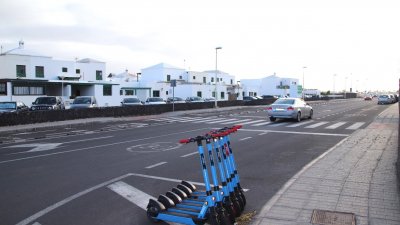
The Yaiza City Council definitively approved the sustainable mobility ordinance last Thursday in a plenary session with the aim of "promoting and regulating the use of personal mobility vehicles (PMV)" as a safe transportation alternative, both for the users of scooters themselves, as well as for users of any vehicle and, of course, pedestrians, tired of suffering their circulation on sidewalks or pedestrian streets such as Calle Limones or the Playa Blanca Maritime Promenade.
The regulation comes into effect from the time it appears published in the Official Gazette, so the Administration recommends its full reading and compliance to avoid sanctions, but above all to preserve the integrity of drivers and pedestrians. The Councilor for Urban Planning, Karina Centeno, reported to the Municipal Plenary on the allegations of the tourism employers' association Asolan and one of the companies dedicated to the rental of electric scooters in the period of public exposure of the text, some of which have been partially accepted by the Administration.
In any case, the City Council states that according to the normative document of the General Directorate of Traffic (DGT), which includes the technical characteristics that PMVs must meet and the obligation that said vehicles have been certified by the competent bodies and the restrictions they have, PMVs, including scooters, are prohibited from circulating on sidewalks, interurban roads, crossings, highways or dual carriageways and their drivers are subject to the same maximum alcohol rates allowed by the Road Safety Law, as well as the prohibition of driving with the presence of drugs in the body. They also cannot wear headphones, or use their mobile phone or any other device while driving.
Helmet: approved and mandatory
This is an essential protection accessory for the safety of users that is mandatory for all scooter drivers, regardless of age or the type of road they are traveling on. To protect physical integrity, the Administration recommends the use of an approved protective helmet. The DGT details that municipalities have the capacity to regulate in matters of mobility, but the helmet is part of the minimum equipment and is mandatory throughout the Spanish territory. Admitting allegations from Asolan, the municipality will adapt its signage considering the circulation of scooters and will emphasize that they may park in the spaces specifically reserved and signposted for this purpose.
Regarding one of the allegations presented by a scooter rental company, the City Council admits that the civil liability policy of the activity, in the name of the applicant company, which details the activity to be carried out and the coverage for damages that the development of the same could cause to the user and to third parties, cannot be unlimited, since the insurance market does not offer unlimited coverage, so that the requirement would prevent the circulation of PMVs, just the opposite of what is intended to be regulated.
The objective of the municipal regulations, which contemplate a specific title and sanctioning regime for companies dedicated to the lucrative exploitation of scooters and PMVs, is to regulate the use and circulation of pedestrians, bicycles, bicycles with assisted pedaling and other vehicles, harmonizing the different uses of roads and urban spaces in order to guarantee road safety, traffic flow, adequate distribution of parking, improvement of air quality and universal accessibility and the rights of people with reduced mobility and the protection of the integrity of public and private heritage.



Add La Voz de Lanzarote as a preferred Google source.
Stay informed with the latest current news.