
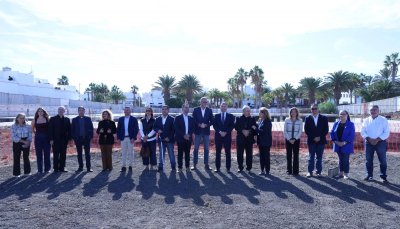
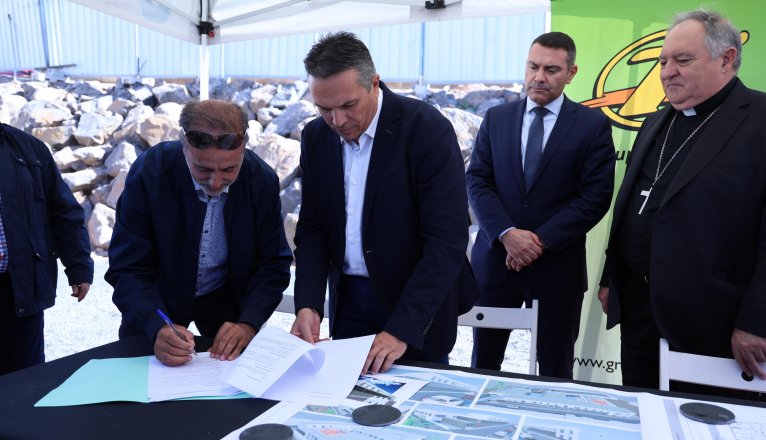
The Cabildo of Lanzarote writes a decisive page this Thursday in its commitment to social inclusion. The works on the Integral Care Center of Cáritas Diocesana have officially begun after the signing of the site survey report between the Diocese of the Canary Islands and the awarded company. With this step, a space that had been paralyzed for more than fifteen years is finally reactivated and, with the impetus of the Cabildo, will become one of the main social landmarks on the island.
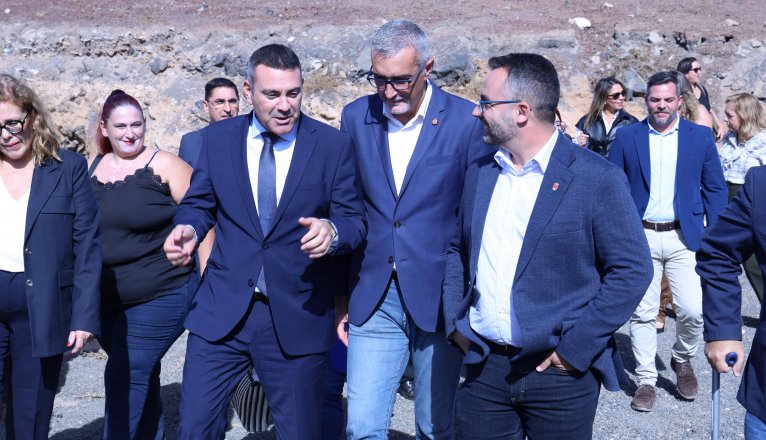
The event was attended by the president of the Cabildo, Oswaldo Betancort, the bishop of the Diocese of the Canary Islands, Monsignor José Mazuelos Pérez, the president of the Parliament of the Canary Islands, Ástrid Pérez, the vice president María Jesús Tovar, the acting mayor of Arrecife, Echedey Eugenio, and the Minister of Social Welfare and Inclusion, Marci Acuña, along with other authorities and representatives of the Diocese and the company responsible for the works, as well as some residents of Altavista, including the president of the Padre Claret Neighborhood Association, Mari Carmen Santacruz, who was very moved to see this project, which revitalizes the neighborhood, come to fruition.
The project has an investment of 10 million euros entirely financed by the Cabildo, which will allow the recovery of a space that has been degraded since 2009. Now it will become, thanks to the Cabildo, a complex of about 7,000m2 dedicated to the comprehensive care of people in vulnerable situations.
The future multipurpose center will bring together essential services in one space, such as a senior residence, day center, emergency housing, soup kitchen, food bank, and vocational training.
“A forgotten space that we are turning into the future”
For President Oswaldo Betancort, the start of the works represents much more than an administrative milestone. "The Cabildo's funding puts an end to years of neglect. Today Lanzarote recovers a forgotten space and turns it into hope, dignity, and future. This center is a symbol of this Institution's commitment to those who need it most. After years of being stalled, we are relaunching a project that shows Lanzarote is moving forward without leaving anyone behind."
The vice president, María Jesús Tovar, highlighted the importance of this day for the island because "after more than fifteen years of waiting, this care complex is beginning to move forward. The site survey marks the real start of a profoundly necessary project, both for the island's social network and for the urban recovery of the Altavista neighborhood".
For his part, councilor Echedey Eugenio highlighted the collaboration established with the Cabildo of Lanzarote and the Diocese to expedite this project, and emphasized the importance this project represents for the Altavista neighborhood. He underscored
This project is, in the words of councilor Marci Acuña, a decisive response in the fight against exclusion, being "a historic step towards a more solidary Lanzarote. This center will offer care, support, and real opportunities to rebuild life projects. We are not just talking about infrastructure: we are talking about a human and structural response for those who have been waiting for solutions for too long".
A New Care Model
The start of construction work on the future Comprehensive Care Center of Cáritas Diocesana is part of the Cabildo de Lanzarote's largest investment effort in social infrastructure in recent decades. In total, the island Corporation is allocating 36.6 million euros to strengthen the socio-health care network, exponentially increasing the places offered.
This figure includes 16 million euros for the new elderly residence and day center in Tahíche, 10 million euros for this comprehensive Cáritas center, which begins its work today, and an additional 10 million euros allocated to the purchase of homes in municipalities, with the aim of transforming them into new socio-health resources and moving towards a closer, more friendly, and person-centered care model.
"Lanzarote is today more than ever a regional benchmark in inclusion and well-being," stated President Oswaldo Betancort
Add La Voz de Lanzarote as a preferred Google source.
Stay informed with the latest current news.


