
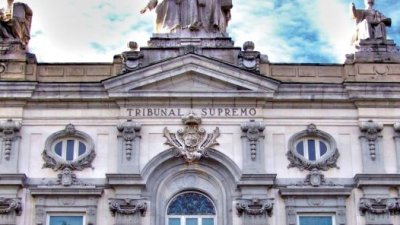
It is "legally inadmissible" that "urban illegalities be imposed by force of fact." That is what the Supreme Court has reiterated in three rulings that nullify the General Urban Planning Plan of Marbella and that once again set a precedent on a matter that directly affects Lanzarote, where plans have been approved (and continue to be attempted to be approved) that seek to provide coverage for illegal constructions (from hotels to a marina, wineries, and homes).
"This type of planning does not have legislative support, as it does not contemplate making a city, but rather remaking a city, but remaking it not because its rehabilitation, regeneration, or renovation is intended, but because what was done in the past was done illegally," the Supreme Court argues regarding the Marbella plan, adding that "its destiny, its reason for being, is not the future of Marbella, but its past," seeking its "legalization."
Furthermore, it adds that the document conveys "the sensation that the requirement of new endowments is not imposed by the new plan, but is imposed as a consequence of the illegalities derived from the non-compliance with the previous Plan." This refers to the new provisions included in the document, as a result of having to adapt the city to what was built outside the law.
Planning does not have the "power" to legalize
The three new rulings of the Supreme Court side with the appeals filed by three individuals, one of them a community of owners in Marbella and the other two companies, and nullify the planning approved in 2010 by the Junta de Andalucía. Among its arguments for declaring the Plan null, the Court emphasizes that "it does not correspond to the scope of the planning power to modulate the legalization of what has been illegally built," but also highlights other shortcomings of the document that lead to its annulment.
On the one hand, that the environmental assessment does not analyze the different alternatives, which "are not even described in a clear and precise way, so that we can know what they would be, and even less are the reasons for the selection of the planned alternatives and a description of the way in which the evaluation was carried out." On the other hand, that an economic sustainability report was not prepared either, which is the one that must guarantee that there are public and private resources for the implementation and commissioning of the plan and to develop in parallel "an adequate level of service provision to citizens."
In its ruling, the Supreme Court directly links the absence of these procedures to the fact that one of the "inspiring designs" of the Plan is to "normalize undesirable past urban situations contrary to legality." In this regard, it emphasizes that these "essential procedures," such as the Strategic Environmental Assessment, "lose their reason for being and useful meaning when they are projected onto an urban plan that, in reality, looks more to the past than to the future, thus distorting the capital ideas of caution, foresight, prevention, and planning - economic or environmental, as the case may be - that justify their mandatory nature."
Thus, it insists that even if that environmental document had been issued, "it could not, given the pre-existing situation, achieve the purpose that is its own," taking into account the "vocation of legalization" and "normalization" of urban irregularities that the General Plan pursued.
The "exceptional situation" does not justify it
In its ruling, Chamber III of the Supreme Court points out that it is aware of the "situation of widespread urban illegality existing in the municipality of Marbella, as a consequence of the numerous actions carried out outside - or against - what was foreseen in the previous PGOU of the municipality of 1986" and of the "exceptionality of the situation created, with repercussions in the field of political management of the city," which even came to be intervened, ordering the dissolution of the City Council, while the political leaders of the consistory, as well as officials and promoters, were adding convictions and pending trials.
However, it emphasizes that this does not justify the approval of a Plan that fails to comply with legal requirements. "Illegalities do not admit execution through planning alternatives," the Supreme Court points out, which warns that in this way the "authentic purpose of the plans is distorted."
In another parallel with the situation in Lanzarote, and in particular with the Playa Blanca Partial Plan, one of the rulings recalls another previous ruling by the Supreme Court referring to the situation of "bona fide third-party purchasers," in allusion to the residents who bought houses that were later declared illegal. On this issue, it insists that the fact that there are these affected third parties "lacks transcendence for the purposes of preventing the execution of a judgment" and emphasizes that, in any case, the responsibilities in which the promoters could have incurred "for the damages caused" to those residents should be purged.
Furthermore, coinciding also with some of the events that occurred in Lanzarote, in one of the rulings it is emphasized that in Marbella, the promoters did not make the mandatory transfers and this is attributed "not only to the illegality of the licenses granted, but also to the deficient management in the control that what was built, in reality, at least, conformed at least to what was unduly authorized." That is, that, as happened for example with many illegal hotels in Playa Blanca, they not only obtained an illegal license, but also built even more than what that license authorized.
Add La Voz de Lanzarote as a preferred Google source.
Stay informed with the latest current news.