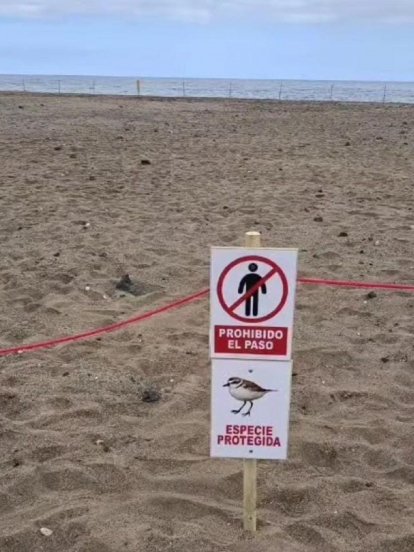
The mayor of San Bartolomé, Isidro Pérez, spoke this Wednesday on Radio Lanzarote-Onda Cero to explain that the San Juan festivities will once again be held in Playa Honda after last year's cancellation at the last minute to protect the nesting of the Kentish plover (charadrius alexandrinus).
According to Seo BirdLife, the Kentish plover is in danger of extinction and is part of the National Catalogue of Threatened Species, in the category of vulnerable. In addition, it is a inhabitant of beaches, coastal sands, salt marshes and lagoons.
This bird has been a victim of the transformation process of the Canary and Spanish beaches. Since 2007, it has suffered a decline of more than half of its specimens in the communities in which it lives (Comunidad Valenciana, Galicia, Baleares and the Canary Islands).
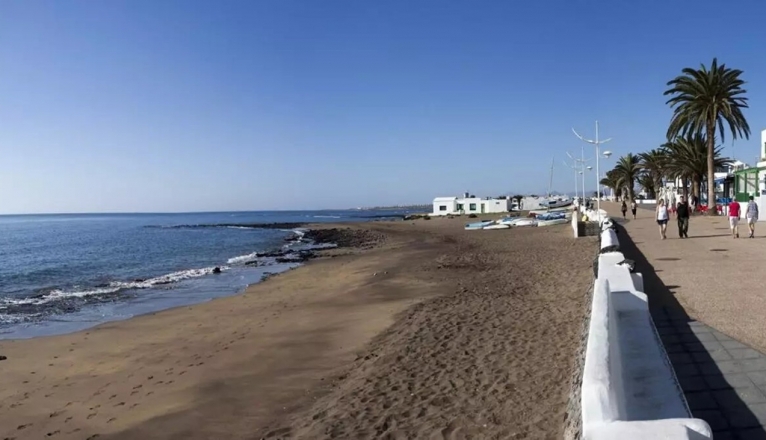
"We have moved the traditional bonfire from Playa Honda to El Curita beach and we will all live together at the festivities. There will be a bonfire, music and party, in short. A perfect combination with the Kentish plover", Pérez highlighted during the radio program.
The mayor was very happy in his speech on the morning show Buenos días, Lanzarote because the day before an expert in the conservation of the Kentish plover, Gustavo Tejero, had informed him that the nesting had gone well. "This year all the appropriate measures have been taken, we continue to maintain the perimeter space where the possible nesting area of the Kentish plover is located," he indicated.
"He called me precisely to thank me for having taken into consideration the human part that the San Juan part has and the recovery of an animal that is in danger of extinction," Pérez stressed.
"Last year a zone of the beach was already marked off. We could have removed them when the nesting period ended, between March and June, but we decided to keep it because we are trying to recover the sea grape (tetraena fontanessi), which is a plant that also grows there," the mayor explained.
These sea grapes are coastal plants that thrive in sandy and rocky areas where they absorb salts and water from the tide. In addition, it is a protected species in the Canary Islands.
"We want a combination between biodiversity and the use and enjoyment of the beach," Pérez concluded.



Add La Voz de Lanzarote as a preferred Google source.
Stay informed with the latest current news.