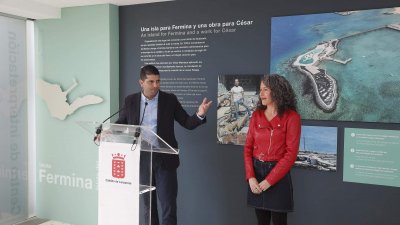
The Cabildo of Lanzarote presented this Monday in the Islote de la Fermina the new Interpretation Center on underwater archeology in Arrecife. In this way, the island becomes the only one in the Canary Islands that manages two centers of this type.
The center 'Bahía de Arrecife' is the second infrastructure of this type, framed within the transnational Margullar project, mainly focused on the creation of a tourist product that values the underwater archaeological sites and awarded with the recognition to the International Tourist Cooperation 2022 granted by Asicotur (International Association for Tourist Cooperation).
The event was attended by the Councilor for Heritage, Ariagona González, and the CEO of the Art, Culture and Tourism Centers, Benjamín Perdomo, among others.
The president of the Cabildo, María Dolores Corujo, recalled that "La Graciosa already has the Interpretation Center 'El Río', the first of its kind in the Canary Islands and highlights that this new infrastructure is an example of the Institution's commitment to this type of projects that enhance the natural environment and the history of the island".
For her part, Ariagona González pointed out that, as in La Graciosa, the marine heritage of Lanzarote and, in this case, of Arrecife, deserves to be known by the population and by visitors. "This center is the best way to protect our history and give value to a unique underwater environment like the one Lanzarote has".
Likewise, Benjamín Perdomo highlighted the creation of this type of centers in the Cabildo's objective of "creating tourist attractions related to the environment, nature, culture and history of the island, so that people can learn more about the charms of Lanzarote".
The Margullar project, of the Operational Program of Territorial Cooperation (Interreg V-A) Spain-Portugal (Madeira-Azores-Canary Islands [MAC] 2014-2020, co-financed with ERDF funds, focuses on the fourth axis of a large program, and this aims to conserve, value and disseminate maritime history through the underwater heritage of Macaronesia. Likewise, this project has served not only to create a new tourism model, but also to train new professionals in the sector, both in Lanzarote and in other countries such as Senegal or Cape Verde, and also contributes to articulate the island society and its cultural legacy.


Add La Voz de Lanzarote as a preferred Google source.
Stay informed with the latest current news.