
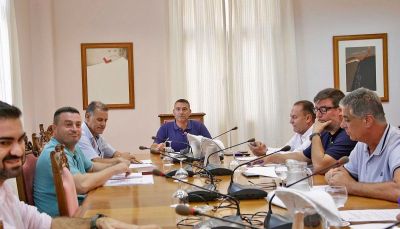
The General Assembly of the Lanzarote Water Consortium, held this Wednesday at the Cabildo, has approved an immediate action plan to "respond to the problems in the water supply network on the island in order to reduce losses and improve production and storage," reports the Cabildo.
This initiative is part of the 'Infrastructure Action Plan for the supply of drinking water' in Lanzarote and La Graciosa, presented by the new Government group, which will seek to "put an end to the critical situation of the integral water cycle in the islands".
In the General Assembly of the Lanzarote Water Consortium, constituted in the General Board of INALSA, it has been agreed with the municipalities and Canal Gestión to execute this plan, so that "urgent actions will be undertaken to renew the supply network in the 38 streets with the most breakdowns, among other actions that will be developed between 2023 and 2027", adds the Island Government.
Oswaldo Betancort highlighted "the importance of inter-administrative collaboration to carry out this project, through which the great difficulties to ensure the production and distribution of water on the Island of Lanzarote and La Graciosa will be addressed".
"The execution of various actions is immediately required to alleviate the current serious problems, including the supply of La Graciosa and other actions to reduce water cuts in several parts of the island," said the president.
"To alleviate the current serious problems, such as the supply of La Graciosa and other actions to reduce water cuts in several parts of the island"
In this line, the Minister of Water, Domingo Cejas, explained that "the works included in the measure called 'Renovation of the water supply network of the streets with the highest number of breakdowns' consist of interventions in the existing water supply network that run, for the most part, through roads in urban areas.
"The emergency and immediate execution actions are intended to immediately reduce the risk of current shortages through actions on the drinking water production system, on storage tanks, on the management of supply networks, on the production capacity of regenerated water and on raising awareness among the population".
The most important works will consist of "remote management of network pressures, awareness campaigns for responsible consumption, leak detection campaigns, renovation of infrastructure in the streets with the most breakdowns, increasing storage capacity by putting tanks into service, renovation of the underwater transport network to La Graciosa, increasing the production capacity of regenerated water and installation of portable desalination plants, among others," concludes the Cabildo.


