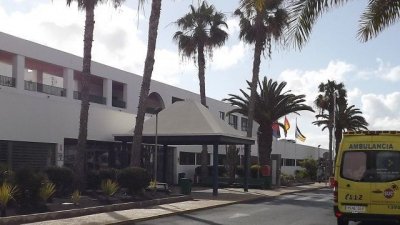
Intersindical Canaria has denounced this Friday that the technical staff of the Blood Bank of the José Molina Orosa Hospital is "at a minimum" and has demanded the "immediate" hiring of one more laboratory technician to reinforce the night shift. "Given the seriousness of these circumstances and for the benefit of patients, the Laboratory Technicians of this hospital center announce that they will take the necessary union pressure measures in order to receive a positive response from the center," they warn.
According to the union in a statement, "this claim has been made repeatedly through the presentation of various writings, both to the supervisor of the service and to the management of the hospital center", but "without receiving any response."
"Faced with this situation, the Laboratory Technicians group wants to inform the public that the lack of personnel poses a risk to the quality of the health service, given its precariousness," they warn in their press release. In this regard, they explain that "a single technician is forced to provide their services, at night, both in the emergency hematology laboratory and in the blood bank", which is added "to the characteristics of the hospital infrastructure itself, since both services are separated, which entails a continuous transfer of material and the worker to the area where their services are required."
IC reminds those responsible for the Doctor José Molina Orosa Hospital that the last expansion of the staff occurred in 2007, with the hiring of a technician for the afternoon shift. "Twelve years later, the growth of the Island's population as well as the service provided to tourists, make it necessary to incorporate new personnel," he points out. He also emphasizes that the center has carried out the expansion of other specialties, including hematologists who have gone from 2 to 5 in the same period of time.
In addition, they add that according to the data handled by the union, "the number of emergencies and surgical operations has increased considerably, factors that directly affect the number of blood bags that must be crossed".
Add La Voz de Lanzarote as a preferred Google source.
Stay informed with the latest current news.