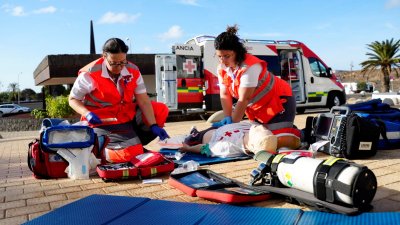
The Lanzarote Safety and Emergency Consortium held a commemorative event this Thursday to mark European Cardiac Arrest Awareness Day, which took place in the vicinity of the Cabildo of Lanzarote, with the aim of raising awareness and training citizens on the importance of acting quickly and effectively in the event of a cardiorespiratory arrest.
The activity, given by the technician of the Canary Islands Health Service, Benjamín Nieves, was attended by sixth grade Primary students from the CEIP Antonio Zerolo, who later participated in an explanatory simulation. During the exercise, the essential steps of the chain of survival were shown, such as recognizing the arrest, alerting 1-1-2, and initiating cardiopulmonary resuscitation (CPR) maneuvers, underlining the value of early education in emergency matters.
The president of the Security and Emergency Consortium of Lanzarote, Francisco J. Aparicio, highlighted the importance of this type of initiative "to promote prevention and response capacity among the youngest." "Acting quickly in the event of cardiac arrest can mean the difference between life and death. That is why it is so important to train our boys and girls in how to react." "They can also save lives, and from the Consortium we want to continue taking this message to every corner of the island," he asserted.
Aparicio also mentioned that the Security and Emergency Consortium will continue to develop awareness and training activities in educational centers and public spaces of Lanzarote, in coordination with the Island Council, with the purpose of strengthening the culture of prevention and safety among the population.
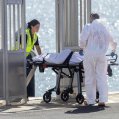
The day concluded with a full simulation in which the students were able to learn firsthand the procedure to follow in the event of a cardiorespiratory arrest, from the initial alert to the ambulance transfer.
Add La Voz de Lanzarote as a preferred Google source.
Stay informed with the latest current news.