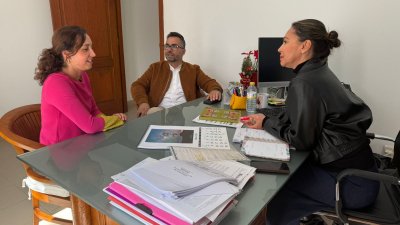
The Department of Social Welfare of the Arrecife City Council, directed by Maite Corujo, has launched the project The chair next door, a pilot initiative of psychological and cognitive intervention aimed at people over 55 years old who are in a situation of social vulnerability, especially those who suffer from isolation, mobility limitations or low autonomy and who do not have a recognized situation of dependency.
This innovative program arises from the coordination between two key resources of the municipal Social Services: the Canarian Citizenship Income (RCC), an economic benefit from the Government of the Canary Islands aimed at covering basic needs that incorporates a plan of personalized care to reduce situations of vulnerability, and the Home Help Service (SAD), which provides support at home to facilitate the autonomy and permanence of people in their usual environment.
From this collaboration, a specific intervention has been designed for profiles previously detected by the technical teams of both services. Many of these people are in an intermediate situation: they do not have dependency recognition, but they also do not have full autonomy to manage their daily lives, which frequently results in social isolation, lack of stimuli, and a profound feeling of loneliness.
The project will primarily take place at the participants' homes, thus facilitating access to psychological care and overcoming mobility or motivation barriers that hinder their participation in other community resources. For six months, between March and August 2026, a specialized psychologist will develop individualized intervention plans for each case, with therapeutic support sessions, cognitive stimulation, and continuous monitoring.
The initiative will directly benefit 30 users selected by the municipal Social Services, as well as their families or caregivers, who will also receive support to manage the emotional burden and difficulties associated with daily care.
Among the objectives of the program stand out improve the emotional well-being of the participating individuals, promote healthy lifestyle habits, favor their integration into the community and prevent situations of dependency through cognitive stimulation activities and accompaniment in outdoor excursions. Likewise, it seeks to strengthen social support networks and offer tools to family members to better cope with the burden of care.
The project is based on the Social Intervention Psychology intervention model Getting to Outcomes (GTO), a methodological approach that allows designing, implementing, and evaluating social programs through a structured process aimed at obtaining measurable results. In this sense, the initiative is proposed as a pilot experience with continuous evaluation to analyze its real impact and assess its possible continuity in the future.
For the deputy mayor and councilor for Employment, Echedey Eugenio, projects like “The chair next door” reflect the commitment of the Arrecife City Council to promote public policies close to the citizenry. “Attention to people experiencing situations of loneliness or vulnerability must be a priority for any public administration, and this type of initiative demonstrates that from the local level we can generate real and close responses,” he pointed out.
For her part, the Councilor for Social Welfare, Maite Corujo, emphasizes that this initiative responds to an increasingly visible reality in society. “On many occasions we talk about unwanted loneliness, but behind that concept there are specific people who spend entire days without a conversation, without stimuli and without feeling accompanied. With this project we want to get closer to them, literally sit by their side, listen and help.”
Corujo also highlights the preventive value of this intervention. “Our objective is to improve the quality of life of these people before the situation leads to greater problems. We are committed to close, professional, and personalized care that also takes into account caregiver families, who often bear a great emotional and physical burden.”
The councilwoman explains that the name of the project precisely symbolizes that accompaniment. “The chair next door represents that space that often remains empty in the lives of those who feel alone. We want to occupy that chair with a professional, empathetic, and committed presence that helps to rebuild bonds, recover motivation, and strengthen psychosocial well-being.”


Add La Voz de Lanzarote as a preferred Google source.
Stay informed with the latest current news.