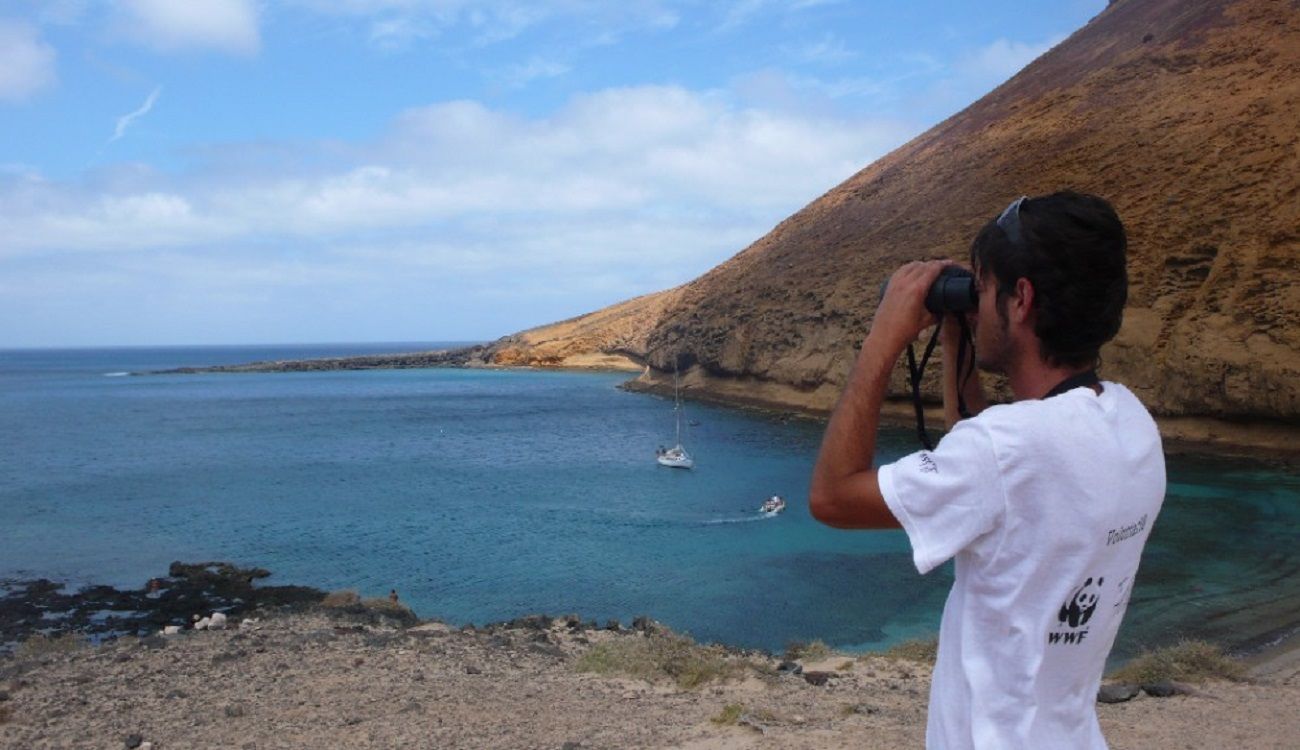
The World Wide Fund for Nature (WWF), together with the help of fifty volunteers, will carry out, from this Saturday and until November 15, conservation, awareness and study work in the Chinijo Archipelago Natural Park, "the most important maritime-terrestrial area of the Canary Islands".
The work will focus on the island of La Graciosa and will concentrate 50 volunteers who, in weekly shifts, will carry out activities such as collecting plastics from the coast, environmental awareness and information to visitors and assessing the state of conservation of natural resources, within the Volunteer Program of the Autonomous Body of National Parks.
In addition, in a complementary way, action will be taken from October to November on the islet of Alegranza, evaluating the effects of marine pollution on birds and marine invertebrates and helping in the work of supporting surveillance.
It should be noted that this is not an isolated project, but since 1998, and uninterruptedly, WWF has been working on the conservation of this area through its "Chinijo Campaign", in which more than 1800 volunteers have already participated.
"The Chinijo Archipelago Natural Park is the natural area with the most protection figures in the Canary Islands and is home to the greatest biodiversity of marine species, the most important bird populations in the region, and is also the fourth most important site in Europe in terms of flora," WWF points out.
However, they also emphasize that this area has "important threats that endanger its conservation, such as marine pollution, overfishing, poaching, introduced species, increased tourist pressure, with the arrival of 500,000 visits per year."
"Furthermore, even today it lacks agreed conservation rules and a participatory management body, so the Chinijo Campaign organized by WWF Spain for more than two decades is of vital importance and, today, is more necessary than ever," WWF adds.



Add La Voz de Lanzarote as a preferred Google source.
Stay informed with the latest current news.