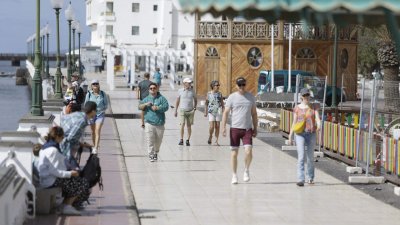
The Ministry of Health of the Government of the Canary Islands, through the General Directorate of Public Health of the Canary Islands Health Service (SCS), has warned that the level of ultraviolet (UV) radiation in all the islands - including Lanzarote - is at an extreme level until at least July 4, according to data provided by the State Meteorological Agency (AEMET).
Given this situation, the main recommendation is to completely avoid sun exposure at any time of the day, even on cloudy or windy days, as UV rays pass through clouds and continue to affect the skin and eyes.
The Public Health Department reminds that the Canary Islands is the autonomous community with the highest solar radiation in Spain throughout the year, which increases health risks, especially in areas such as Lanzarote, where many work and leisure activities are carried out outdoors.
Among the most common adverse effects of overexposure are sunburn, photoallergic reactions, immunosuppression and, in the long term, an increased risk of skin cancer and eye diseases.
It also warns of the cumulative damage of sun exposure, especially during childhood, a key stage in the prevention of future dermatological problems.
Who is most affected?
The most vulnerable population includes those who:
Have fair skin or a family history of skin cancer.
Work outdoors or engage in prolonged activities in the sun.
Are over 50 years old.
Use photosensitive medications, such as antibiotics, contraceptives, or products with benzoyl peroxide.
Essential recommendations in Lanzarote
Health authorities insist on following these guidelines in the coming days:
Completely avoid sun exposure.
Use SPF 50+ sunscreen every day, even on cloudy or breezy days.
Wear clothing that covers arms and legs, a wide-brimmed hat, and sunglasses with UV protection.
Seek shade and avoid outdoor activities during the central hours of the day.
Pay special attention to children, the elderly and exposed workers.
In addition, each week, the General Directorate of Public Health will publish a map with UV risk levels for each island. Currently, all of the Canary Islands are at an extreme level, the maximum contemplated in the SCS Preventive Action Plan.
The Government of the Canary Islands insists: sun protection is not just a summer or beach thing. In Lanzarote, where the sun is part of everyday life, prevention must be constant throughout the year.



Add La Voz de Lanzarote as a preferred Google source.
Stay informed with the latest current news.