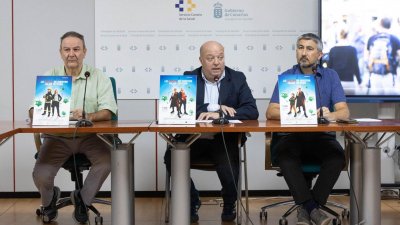
The Ministry of Health of the Government of the Canary Islands presented this Tuesday the 2025-2026 seasonal vaccination campaign, which will begin in all health centers this Thursday, October 16. The general director of Public Health of the Canary Islands Health Service (SCS), José Díaz-Flores, together with the head of the Epidemiological Surveillance and Prevention Unit, Álvaro Torres, and the senior technician of the Vaccine Program, Abián Montesdeoca, presented the planned operation for this new season at the SCS headquarters in Santa Cruz de Tenerife, which incorporates novelties compared to previous years, as well as the information campaign aimed at the target population.
José Díaz-Flores explained during his speech that the SCS has acquired a total of 267,000 doses of different types of vaccines to face this 2025-26 flu season, adapted to all groups for whom immunization is indicated.
Flu vaccination is recommended for pregnant women, people over 60 years of age, people aged 6 years or older with chronic diseases or in residential centers, cohabitants of vulnerable people, children from 6 months to 6 years of age, and essential personnel for the community. To face this season, five types of flu vaccines will be available, as explained by Abián Montesdeoca, who stressed that "the expansion of the vaccine offer to more boys and girls and the fact of being able to administer the intranasal vaccine to children under 15 years of age with risk factors should lead to an increase in coverage in this target population with the consequent positive impact on their health and that of their cohabitants."
The flu campaign will officially end on December 31, although it may be extended until March 31 depending on the epidemiological evolution of the virus.
Updates on Childhood Flu Vaccination
Following the success of the school-based flu vaccination campaign during the 2024-2025 season, which was highly valued by families, the educational community, and healthcare personnel, this year the child population included in the program is being expanded, incorporating a new cohort (boys and girls up to the day before their 6th birthday) and extending vaccination to subsidized schools.
This strategy follows the lead of other autonomous communities that have demonstrated better coverage and levels of protection thanks to the use of the intranasal vaccine, which is painless and especially effective in children.
Who should get vaccinated against the flu?
- People over 60 years of age.
- Children between 6 months and 6 years old.
- Pregnant women and women in the postpartum period.
- People with chronic illnesses, immunosuppression, or who are institutionalized.
- Healthcare, social care, and essential services personnel (police, firefighters, civil protection).
- Caregivers and cohabitants of vulnerable people (including cohabitants of infants under 6 months).
- Nursery and early childhood education staff.
- People with occupational exposure to animals (veterinarians, livestock farmers, etc.).
- People who smoke or have other factors that increase their risk, even if they do not suffer from a chronic disease.
Covid Vaccination
The Director of Public Health highlighted the importance of vulnerable groups continuing to get vaccinated throughout the year to prevent COVID-19. "Contrary to what was expected, this virus has not become seasonal in autumn and winter. Cases are reported throughout the year, although with less severity and concentrated in certain risk profiles. That is why we insist on the recommendation to get vaccinated as the best protection for health," said Díaz-Flores.
Given that the target populations for influenza and COVID-19 are different (COVID-19 more severely affects people over 70 years of age and chronically ill people of any age) and that the seasonality of the SARS-CoV-2 virus is unpredictable, the Ministry of Health has established differentiated recommendations for both vaccines, in order to protect the most vulnerable groups and reduce the impact on healthcare. Both vaccines can be administered jointly if indicated, respecting a minimum interval of three months from the last dose or confirmed COVID-19 infection.
Avoiding serious cases
For his part, Álvaro Torres insisted that vaccines are the most effective means of preventing complications in those people who have a more vulnerable profile. "Although they do not prevent infection one hundred percent, they do significantly reduce the risk of hospitalization or death from influenza or COVID-19," he stressed, while pointing out that promoting vaccination also helps to decongest emergency and primary care services, especially in the months when the highest incidence of these respiratory conditions occurs.
Who should get vaccinated against COVID-19?
- People over 70 years of age.
- People older than 6 months with immunosuppression or serious chronic illnesses.
- Residents in care homes, disability centers, or closed institutions.
- Pregnant women (especially in the last trimester).
- Healthcare personnel and caregivers, as a self-protection measure.
Vaccination Incentive Campaign
The advertising campaign to encourage vaccination and remind the public who should get vaccinated will be rolled out in two waves on television and radio, and will also be displayed through outdoor advertising, print and digital media, and social networks.



Add La Voz de Lanzarote as a preferred Google source.
Stay informed with the latest current news.