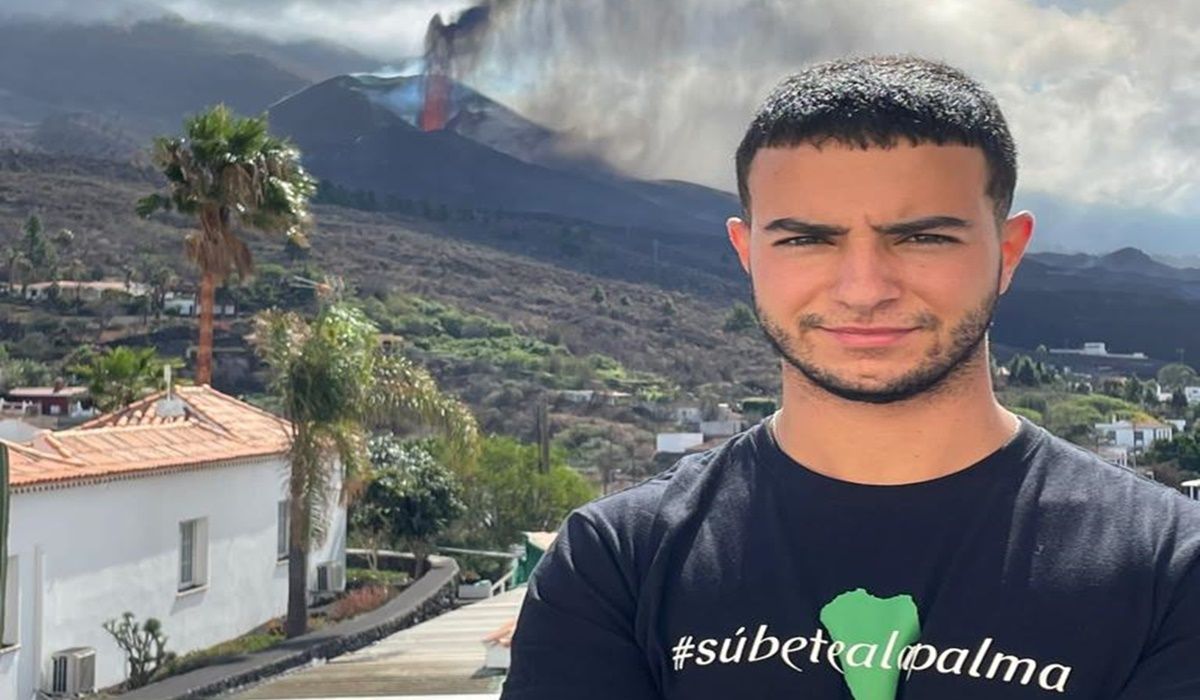
The lava from the volcano has caused havoc in numerous homes and lands in La Palma. This is the case of Rodolfo Martín, a palmero who lived in his parents' house in the El Paraíso neighborhood, in El Paso, and who, after the lava buried his home, has decided to start a new life in Lanzarote, as he has told on Radio Lanzarote – Onda Cero.
He begins this new life on the island of Lanzarote thanks to the help of Prensa Juvenil Canaria. "A new stage has begun here," said Rodolfo, who highly values "leaving La Palma", since we must "follow the path."
"In mid-October it was suggested to me that I could be helped from here, that I could be welcomed and since last Thursday I have been on the island, living here," he explains, and maintains that it is "thanks to the solidarity of Prensa Juvenil Canaria."
"A part of us has died with the volcano," the young man states, although he does consider that this situation has made many palmeros "rethink" reality.
"What we have to know as palmeros, and canaries in general, is that if we have had to move and emigrate for other milder issues, this has made us human, and put our feet on the ground," said Rodolfo, who maintains that if it is necessary to move "to the neighborhood next door", the canarian society has to assume that "nothing happens".
Twenty days after the eruption, the lava buried his house
"On the one hand it has passed quickly, but the uncertainty and other sensations have made it super slow," said the young man, who explains how twenty days after the eruption, the lava took away his house and his land.
In addition, the situation was even more difficult for him, since just at the time of the eruption, Rodolfo was on a twelve-day trip outside of La Palma, and only five had passed when it began to expel smoke and lava. "Obviously I had to enjoy the trip to the fullest until I got here, (La Palma) and in the first month there were times when you woke up and thought you had a house, and that was very hard," said Rodolfo Martín, who maintains that the acceptance of reality at that moment is "a mental process that everyone takes in their own way", something that is "totally necessary".
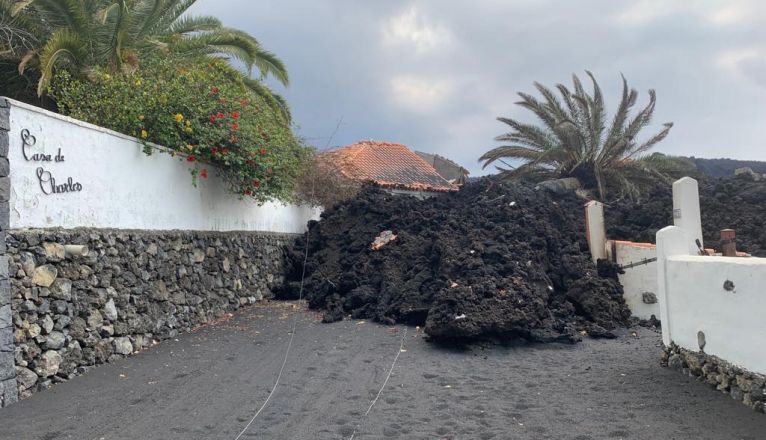
"Seeing how the roof of your house is embedded next to the lava in the middle of the street is very complicated," explains Rodolfo, who knows what he is talking about, because he participated as a volunteer in the supply system for the troops who watched over citizen security.
Once he was homeless, Rodolfo and his parents were taken in by his grandmother, who acknowledges that she is "quite hardened by the ailments of life."
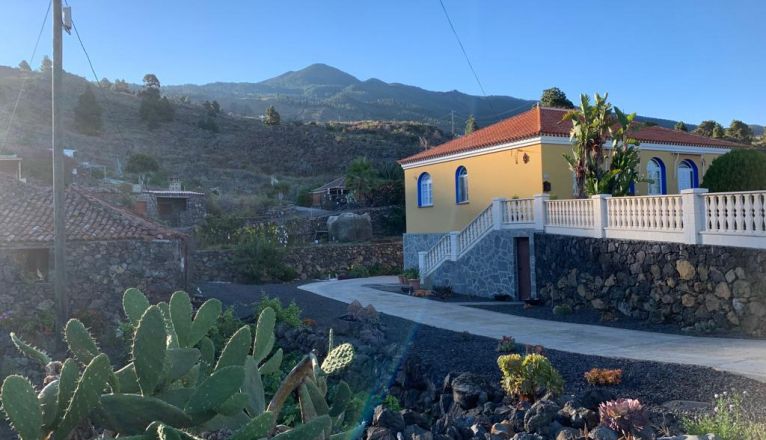
"We must have a vision of what we want to do with La Palma"
When the eruption of the volcano ends, La Palma faces a complicated situation of reconstruction of the affected area, and even "requalification" of some land. However, Martín maintains that "we must have a vision of what we want to do with La Palma", since there will be a space "that cannot be used."
"There is even talk of two kilometers of radius around the volcanic cone," says the young palmero, who cites as an example what happened in Lanzarote with the eruptions of Timanfaya, in the 18th century, as "the best version we could have." "Because we would take advantage of the ash and lava, of what has made us suffer so much, which is what our ancestors have done, and what better example than that," said Rodolfo.
However, he does recognize that there is a space that will not be used again. "It is a matter of looking at where you lived before, and looking at how now there are twelve meters of lava in height and four kilometers wide," Rodolfo detailed, who affirms that nothing can be done there, although there are more accessible areas with volcanic tubes where "something can be done in the future."
Add La Voz de Lanzarote as a preferred Google source.
Stay informed with the latest current news.