On August 20, 2008, a plane crash took the lives of 154 people at the Adolfo Suárez Madrid-Barajas Airport. The Spanair airline plane, which had departed for Gran Canaria a few minutes earlier, crashed, becoming one of the biggest aviation tragedies in Spain. That same day, psychologist Pedro Martín-Barrajón attended to the relatives of a family that had died in the incident, made up of a married couple and two children.
After that accident, "I decided to redirect my professional career to the field of Emergencies," said the current director of the Emergency Area and the National Network of Psychologists for Suicide Prevention, Pedro Martín-Barrajón, in an interview with La Voz. After his work with the families of those killed in the Spanair catastrophe, he began to participate as a volunteer psychologist in the Samur service of Madrid, where he spent another six years. He was then hired as general coordinator of the National Network of Psychologists in Railway Accidents.
The specialist also participated in psychological assistance to the survivors of the attack on Las Ramblas in Barcelona on August 17, 2017, attending to part of the 150 affected. Recently, the Ministry of Health also hired him to be head of the telephone care service in suicidal crises during the confinement of the coronavirus pandemic.
Apart from exceptional episodes in which he performs his work as an Emergency and Disaster psychologist, this expert develops his professional work in the private sphere, through the mental health clinic Psicólogos Princesa 81, based in Madrid.
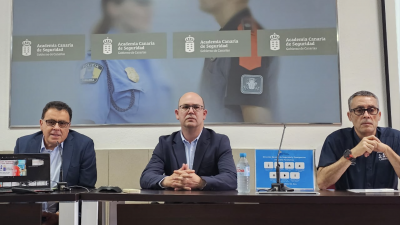
Barrajón coordinates a National Network of Expert Suicide Psychologists, made up of 290 psychologists distributed throughout the national territory and managed from the private sphere. As part of this work, he is visiting the Canary Islands, training 80 Emergency professionals in suicidal behavior care.
The pandemic: a turning point
The coronavirus pandemic seems to have "sensitized the population in general and that we are focusing, for some time now, with success and sometimes without it, on mental health," said Barrajón. The psychologist expert in emergency situations explains that this does not necessarily translate into "adequate measures being put in place, but it does mean that we are a little more concerned."
Although mental health and suicide prevention are ceasing to be a taboo in today's society, public systems are not prepared to meet the demand, with a ratio of 6 psychologists per 100,000 inhabitants nationwide. This relegates many people to pay for care in private clinics and many others to give it up because they cannot afford it.
Faced with this, there is the risk of "psychiatrizing daily life, searching on Google and self-diagnosing a mental health problem, when these are things that we used to overcome independently, autonomously, with more or less suffering." The psychologist gives as an example how we face sentimental breakups or layoffs and how these painful situations are medicalized even though "not everything is mental illness."
Suicidal behavior
According to the National Institute of Statistics, between January and June 2023, the most recent data, 1,967 people took their own lives throughout the country, 75.2% men and 24.8% women. "There is no harmony between the demand of the general population and the resources allocated to health," warned Martín-Barrajón.
Martín-Barrajón has emphasized working to prevent suicidal behavior through campaigns to disseminate mental health and institutional efforts to prevent more people from taking their own lives.
Faced with a suicide attempt, the analysis of calls to 112 from the Canary Islands shows that "in most cases" the caller is not the person who is in a critical situation between life and death, but rather other people who call Emergencies.
Despite the destigmatization of mental health, people who suffer from a pathology "continue to have that fear of being judged, of being stigmatized, of being thought of as crazy," he stressed.
Despite the popular belief that to think about suicide you have to have a mental illness, "what the evidence shows us is that about half of suicidal behaviors have nothing to do with a mental health problem."
Faced with this, people who suffer these situations face the "fear of asking for help, of being treated negatively, of being dehumanized or to avoid being treated as vulnerable or not being taken into account when entering the hospital."
Loneliness in young people
Despite living in a hyperconnected society through technology, the feeling of unwanted loneliness has increased in young Spaniards. "In our country, up to 23% of people between the ages of 16 and 24 suffer from unwanted loneliness, it seems paradoxical that at a time when we are absolutely hyperconnected, by artificial intelligence, social networks and the internet," he stressed.
Sometimes, this social malaise presents itself in the form of self-harm or self-injurious attempts, which do not always translate into suicide attempts as such, but rather into a mistaken tool to try to alleviate the pain. For people close to them who realize that a loved one is self-harming, he recommends that the best thing to do is to ask.
"There is a widespread myth among the general population that if you ask, you can induce someone to suicidal ideation. This is not true, you are not going to induce the idea simply because you ask them to someone who is not thinking about suicide," he pointed out.
Asking can be "the only and last opportunity we have to lend a friendly hand to someone who is in a dangerous situation." The healthcare professional recommends that loved ones ask "have you ever thought about suicide?, has the idea of committing suicide crossed your mind?"
Along these lines, he indicated the importance of banishing the concept of "attention calls", because "they are not, they are requests for help".
How do those who care, care for themselves?
When caring for a person with mental health problems or a suicide survivor, sometimes the support networks also begin to show emotional exhaustion. In the case of family members who have survived the suicide of a family member, their network coordinates Mutual Help Groups of People, where relatives meet with experts to try to cope with the grieving process.
One of the recommendations offered by the coordinator of the Emergency Area and National Network of Psychologists for Suicide Prevention is "to admit the real reason for the death, because up to 40% of people who lost a family member to suicide, invent the causes, that is, they argue that it was a sudden illness, a sudden accident and spend the rest of their lives waiting to see who knows and who stops knowing and lies have very short legs."
Thus, he continued "a premise that may be very hard at the initial moment for a family member, which is to recognize that their loved one has died by suicide, can do them a lot of good in the medium and long term because always lying prevents starting the beginning of mourning in a healthier way."
In addition, he added that it is important to work with experts to reach "a stabilization phase", in which symptoms, such as nightmares, anxiety crises, are addressed. In this sense, also "manage that feeling of guilt that family members have and the eternal questions of what if I had done this, or that other thing."
The impact of wars and catastrophes
The population, more connected than ever, receives constant bombardments of information about wars and catastrophes. However, not all events have the same impact on people's mental health.
"All events that have to do with the voluntary intervention of the hand of the human being generate more trauma than natural disasters or pandemics," reported the expert in Emergency Psychology.
"Trusting is something inherent, humans need to trust others and a volcanic eruption is not the same as an attack, where someone voluntarily, consciously and with a specific purpose tries to leave the greatest number of victims possible," he continued. This reasoning has led experts in Emergency Psychology to reconvert a traditional saying into "misery loves company, because "seeing that other people are going through the same thing as you, offers some comfort and spirit of solidarity."



Add La Voz de Lanzarote as a preferred Google source.
Stay informed with the latest current news.