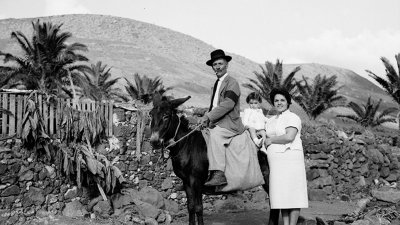
Throughout the centuries, Lanzarote has been characterized by cultivating different fruits, vegetables, cereals, and legumes, but one of the crops that sustained many families on the island and is unknown to many today was tobacco. In the 20th century, tobacco became established as a profitable crop, and in Lanzarote, it remained so until the seventies, at which point it stopped making money with the advent of tourism and was almost completely abandoned.
In the document titled On Tobacco in the Canary Islands, a Local Perspective, by Ramón Díaz Hernández, a Doctor of Geography from the University of Las Palmas de Gran Canaria, some points about tobacco cultivation in Lanzarote are presented.
Specifically, the article points out that Tiagua, Yaiza, and Haría were three of the regions in the Canary Islands that concentrated a large amount of tobacco, where not only its quality stood out, but also the perseverance of its farmers to maintain this dryland crop despite adversities such as drought or wind
Lanzarote's climate was ideal for growing tobacco, thanks to the absence of frost, warm temperatures, and well-drained soils. Despite the strong winds that usually prevail on the island, which led a good portion of farmers to not want to dedicate their sandy land to planting it, those who did agree to it did so by creating windbreaks to prevent damage to the crops or by selecting naturally protected areas.
According to Ramón Díaz, the varieties cultivated on the island were **the *Virginia***, which **years later was replaced by *Bocoi*** due to consumer demand for a milder tobacco. Production in Lanzarote **was exported to islands like Gran Canaria**, which received a large part of the merchandise and where the cigars were manufactured.
Tinajo, the municipality of tobacco par excellence
Benedicto Cabrera is a resident of Tinajo who still remembers how his father and uncle used to grow tobacco in Lanzarote. As he tells La Voz, the first crop of this product was in Ye, around 1925, and a year later, it began to spread throughout the rest of the island. "After the first harvest, with the help of a man named Antonio López, it started to be cultivated in Tinajo, making it the tobacco municipality par excellence," he explains. "In fact, Tinajo used to harvest up to a million kilos of tobacco in good years," he continues.
When he was little, Cabrera remembers planting the Tinajo sandy fields with his father. Thus, he recounts that in the seventies, the Ministry of Agriculture of the dictatorship "offered a six-month payment to the farmers of Lanzarote who promoted tobacco cultivation, but it never made it to the factory because it was bought by the Tabacalera company, so the last two harvests on the island remained at the cooperative".
In ancient times, and still today, Tinajo had the most extensive and richest sandy soils. Benedicto Cabrera recounts that in his own home "tobacco was fermented." As for cultivation, "it was dry farming; seedbeds were made and then planted." The care also involved "topping the plants and removing suckers" so that the plant would focus its effort on producing leaves. After harvesting the leaves, they were hung on cujes, a horizontal wooden rod placed on two vertical ones from which the tobacco hung to dry, which were brought from La Palma.
This drying process took approximately one month for the process to be carried out correctly. "When they started growing tobacco in the north of the island, they would throw the tobacco on top of the walls, but it was already losing quality... in fact, it was paid much more in Tinajo, about four or five pesetas more, than in the north, although sometimes there were some intermediaries who bought tobacco from the northern area and brought it to Tinajo to sell it to the factories as if it were from the municipality," he says.
On the other hand, Cabrera points out that "the closer to the coast tobacco was grown, the more nicotine it had due to the action of saltpeter".
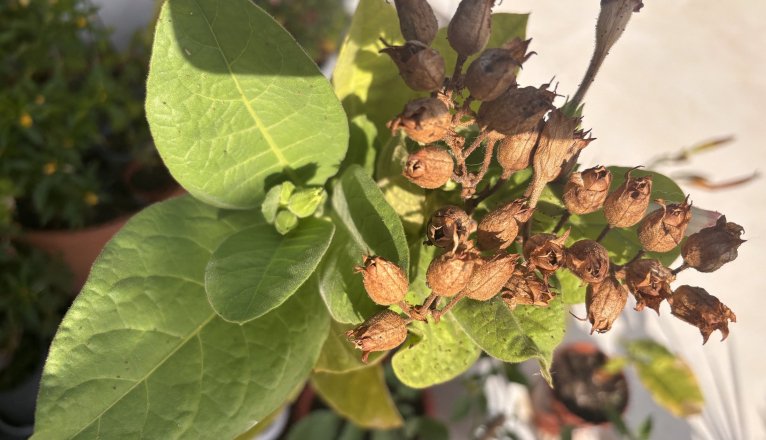
Three distinct cultivation zones on the island
Furthermore, the geographer explains in the document that there were three distinct tobacco-growing areas on the island based on their altitude and geographical location. One of them is the northern high zone, which comprised the municipality of Haría and the valleys belonging to Teguise. Thanks to the altitude of the Peñas del Chache, the humidity in this area was quite high, over 80%, in addition to rainfall that ranged between 80 and 120 liters per square meter. However, he points out that in good years, up to 450 liters could be reached
Thanks to the night humidity, known in Lanzarote as *sereno*, and the volcanic sand of the sandy areas that retained moisture, tobacco could grow correctly. As described in this ULPGC article, **all the farms were family-owned**.
Another of the areas was the lower north, which included the towns of Guatiza and Mala. These places were characterized by lower relative humidity, little rain, and moderate temperatures. Likewise, tobacco was not only planted in sandy areas but also in the gavias in the ravines themselves.
Finally, there was also the **central zone**, which **comprised the towns of San Bartolomé, Tinajo, and Teguise**. Here, the winds were more intense, and plantations were carried out in sandy soil, *gavias*, and the sand itself. In the eastern part of this zone, temperatures were cooler and there was less humidity, while in the west, temperatures were milder, the wind blew stronger, and there was moderate rainfall.
The cultivation of tobacco in Lanzarote provided a livelihood for many families at a time when hunger gripped the lives of many. Thanks to it, they managed to get ahead, and we must tell it, preserve it, and spread it because, as Benedicto Cabrera expresses, "I am the heir to my father's and mother's history".
Add La Voz de Lanzarote as a preferred Google source.
Stay informed with the latest current news.