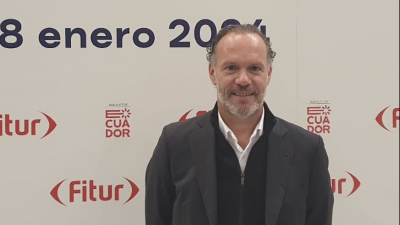
"The fundamental objective of tourism is to improve the quality of life of residents. We are the ones who have to receive and be comfortable with the people we receive in our space," explains Moisés Simancas, Professor of Human Geography at the University of La Laguna. This expert speaks to La Voz after the demonstrations of last April 20th, when the population of the Canary Islands took to the streets to demand a change in the economic model and put an end to mass tourism.
Simancas situates the beginning of this "social anger" and "weariness" since the coronavirus pandemic. "The lockdown has marked a change, a process of reflection in society," says the expert, awarded the Viera y Clavijo Prize (2004) for research.
For Simancas, the weariness of the Canarian population is due to "different factors," although he considers that "tourism is used as the element of articulation of that anger." Among the social problems, he lists weariness towards the socioeconomic model and increased awareness of sustainability, housing shortages, saturation of essential spaces, as happens with hospitals or roads on the islands with more visitors, or the overload of natural spaces.
This social anger clashes head-on with reality, and for this professor, "right now there is no alternative to tourism in the Canary Islands; any region in the world bets on tourism as long as it has potential resources to favor it."
These demands, which have already been more than a month old, were accompanied by requests such as the approval of a new tourist moratorium to prevent the construction of more hotels and extra-hotel accommodations in the Canarian territory. The implementation of a final eco-tax to charge for overnight stays in the archipelago was also demanded, as well as allocating the money to the preservation of the environment; and limiting the purchase of homes by non-resident foreigners. For the moment, all the measures have been rejected by the Government of the Canary Islands, led by Coalición Canaria and the Partido Popular.
Regarding the eco-tax, Simancas reveals that in the end, "tourists are delighted to pay a price to access a protected area, they are used to it and even see it favorably as long as a highly qualified service is provided."
The only step that the regional government has announced so far is the drafting of a law regulating vacation homes, one of the great puzzles for tourism management in Lanzarote, La Graciosa, and the rest of the Canary Islands. For the moment, the regional Executive has already presented a controversial preliminary draft of the Vacation Home Law, which has triggered new registrations of this type of rental on the island.
Currently, despite the success of the calls, this expert warns of the danger of "starting to take measures without thinking, which respond more to a trend or to give a quicker response than necessary." It gives me the impression that since April 20th things are rushing and that there are many more palliative responses than well-thought-out and, above all, agreed-upon responses," he indicates.
The unlimited proliferation of vacation rentals
"We are not increasing the number of tourists, we have the same, but they are staying in different places," Simancas explains. Visitors no longer stay only in the areas reserved for hotels and tourist apartments, but are spread throughout all corners of the island in vacation homes.
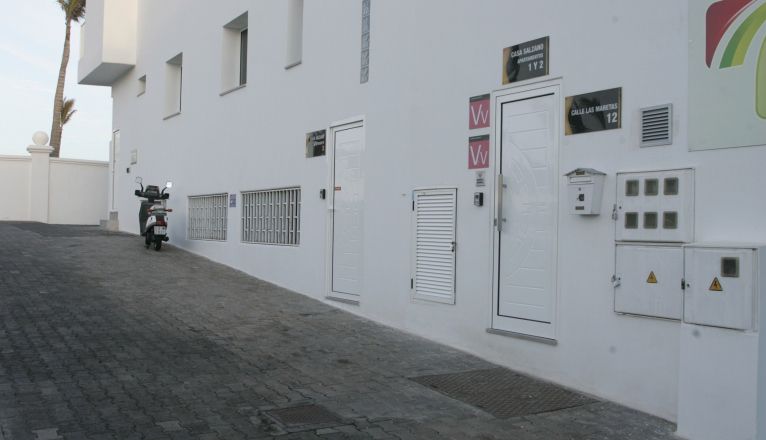
This professor expert in Human Geography indicates that this weariness was exposed after the uncontrolled proliferation of vacation rentals, especially in non-tourist spaces. From vacation homes in La Graciosa, with a ratio of 89 vacation accommodations per 100 inhabitants, to illegal accommodations in rural areas of Lanzarote or in traditionally residential towns.
"Until practically the decree of the year 2015, tourism was limited to the tourist areas of the coast, 2% of the territory of the Canary Islands. From 2015, when an activity that is tourist is prohibited in the tourist areas, it begins to proliferate in any non-tourist space," Simancas recalls.
The doctor from the University of La Laguna indicates that since the approval of decree 113/2015, of May 22, in which the Regulation of Vacation Homes of the Canary Islands was given the green light, this type of accommodation has taken over other corners of the islands.
"Despite this prohibition, vacation homes have also grown in tourist areas, where 46% of the licenses are concentrated," Simancas adds.
Faced with the disadvantages of the rise of vacation homes, this accommodation offer has also been proposed as an element of "democratization of tourism". The local population with a second home is being able to benefit directly from the visitors who came to the islands. However, the Canarian Executive itself has revealed that there are large holders of homes, where there are companies that manage up to 500 vacation rentals in the Canary Islands.
When regulating vacation homes, he advises that it be done taking into account the particular reality of each island. "Vacation rentals seem super interesting to me for rural spaces or the green islands, but I think that on other islands, where we have a fairly important regulated accommodation offer, we should consider a tourist moratorium," he adds.
Weariness among the major tourist destinations
This social anger that is experienced in the Canary Islands does not only occur in the archipelago, but also in other countries and also in other autonomous communities, as is the case of the Balearic Islands. A week ago, more than 10,000 people demonstrated in Mallorca to demand an end to mass tourism.
"On a global scale, society needs or demands that limits be established, which is an element inherent to sustainability, and above all, it is being asked that it be managed," the professor highlights.
"It has been studied from a sociological point of view how, at a certain moment, in any society that tries to propose an approach to tourism, there is a phase of expectation, illusion, and uncertainty. Once tourism is consolidated, and we realize those expectations that the tourist activity had generated, due to poor planning or irritation on the part of society, they have not always been met," he highlights.
A second tourist moratorium in the Canary Islands
It is not the first time that a tourist decrease has been requested in the Canary Islands. Already in 2001, a tourist moratorium was proposed on the islands, which was approved in 2003, to control the growth of hotel and extra-hotel accommodations.
"The difference with this case is that it arose from very minority environmental groups and an established political strategy. However, April 20 was a mobilization that emanates from many social movements and where, from the population, a kind of rejection has already been generated," Simancas adds.
"When we were going to give conferences a few years ago, we already saw that there were people who were very critical of the tourist model, which is not perfect, it is very polyhedral and many of its sides have problems, which must be started to be tackled," he continues.
Solutions from below
Simancas invites us to reflect: "After April 20, we are in a process that, counting on society, businessmen, with politics and the academic part, we could propose a kind of pact for the territory or pact for tourism, where we can define and avoid palliative solutions or put patches."
"In the Canary Islands, we are leaders at a European scale in our model, and I don't say it because we have that need to achieve the maximum record, which seems absurd to me and we have to start considering that. We have to start eliminating those weaknesses and ensure that tourism becomes the driving force of the rest of the economy."
Among other measures, he proposes that tourist companies integrate much more into society, based on corporate social responsibility. "That they develop final projects and that we as a society can see it."



Add La Voz de Lanzarote as a preferred Google source.
Stay informed with the latest current news.