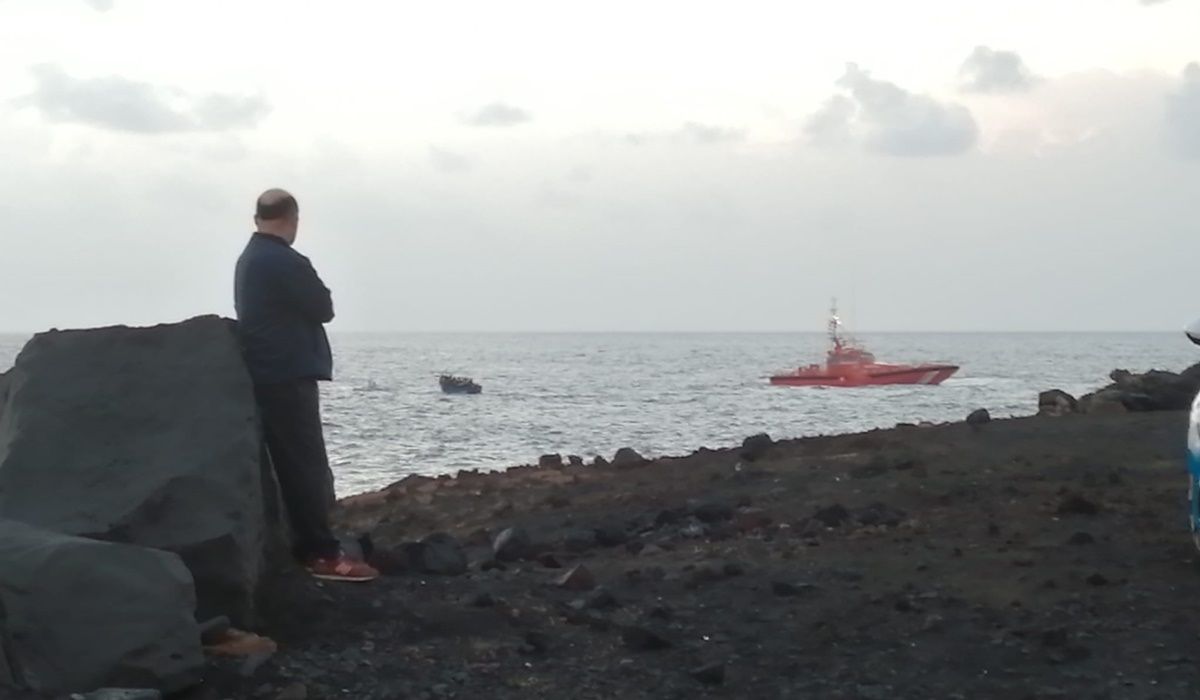
The shipwreck of a small boat with 84 people on board that occurred this morning in El Hierro could become the biggest migratory tragedy in the Canary Islands in 30 years of boat arrivals, surpassing what happened on February 15, 2009 in Los Cocoteros (Lanzarote), where 25 people died.
According to the first available information, Maritime Rescue has recovered nine bodies and is looking for 48 missing people, since only 27 of the occupants of the small boat, which capsized when it was about to be rescued, seven kilometers from the coast, have survived.
In recent years, social organizations and the United Nations Migration Organization (IOM) itself have reported shipwrecks of small boats in the Atlantic with dozens of deaths and no survivors, but to date the biggest tragedy in the Canary Islands continues to be that of Los Cocoteros.
On February 15, 2009, a small boat sank a few meters from the coast of Los Cocoteros, in Guatiza (Lanzarote). 25 of its 31 occupants drowned.
It is not, by far, the worst shipwreck in the history of the Canary Route, which has swallowed entire small boats with more than a hundred people on board, but fifteen years later it is still the one with the highest number of deaths in the Canary Islands.
The first shipwreck that shook consciences in the Canary Islands took place in 1999 in Morro Jable, in Fuerteventura, in which nine young people from Guelmin (Morocco) lost their lives, who had paid 4,000 dirhams each (70,000 pesetas at the time, 420 euros at the exchange rate) to get on a six-meter boat that sank 300 meters from the coast and that was supposedly going to open the doors to the European dream for them.
Others may have happened before, but there were no witnesses or survivors to tell their tragedy, nor bodies to bury.
If there were shipwrecks before, they were "silent", as so often still happens on the Canary Route.
This summer, in addition to the 25th anniversary of the first shipwreck with deaths in the Canary Islands, the 30th anniversary of the arrival of the first small boat to the islands has also been commemorated, which occurred on August 28, 1994, the day on which two young Saharawis crossed by sea for the first time the 96 kilometers that separate the island of Fuerteventura from the African continent.


Add La Voz de Lanzarote as a preferred Google source.
Stay informed with the latest current news.