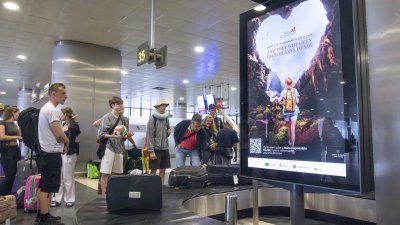
The actions deployed in airports and tourist areas with messages that invite respect for the islands exceed 21 million online impacts.
“This new communication strategy reflects our commitment to promote responsible behaviors and consolidate a tourism model that generates value for both citizens and the environment,” says Jéssica de León.
The Minister of Tourism and Employment of the Government of the Canary Islands, Jéssica de León, recalls that “with these actions we reflect our commitment to consolidate the archipelago as a tourist destination committed to sustainability, authenticity and quality.”
To begin with, during the second semester of last year, the public company Turismo de Islas Canarias activated the awareness campaign with an action in the eight airports of the archipelago starring the slogan 'Respect the environment of the islands and they will open their hearts to you'. The objective was to convey to tourists from the moment of their arrival the importance of adopting behaviors that respect the environment.
The action included a QR code that led to a landing page hosted on the Holaislascanarias.com portal with tips for traveling sustainably through the archipelago. In total, 1.4 million incoming clicks were recorded, which resulted in 1.2 million visits to this page. In addition, the majority of users consumed the main content before abandoning navigation and more than one million unique monthly visitors were counted.
This action was articulated in 52 digital advertising panels located in strategic points such as baggage claim and arrival areas, as well as access areas to discretionary transport buses.
These locations guaranteed a high level of visibility and coverage since visitors were in moments of waiting and transit, which increased their predisposition to pay attention to the contents. Added to this was the diverse origin of the tourists, with a high representation of key issuing markets such as the United Kingdom, Germany, Italy, Ireland, France and the Netherlands.
Support the local economic fabric
After the completion of this action, last April another initiative was launched that "replaces the general approach with a message structured around seven specific, clear recommendations directly linked to sustainable practices,” explains the managing director of Turismo de Islas Canarias, José Juan Lorenzo, who recalls that this initiative will remain active until the end of this year.
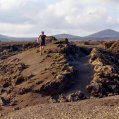
With this new action, visitors are invited to support the local economic fabric through the consumption of local products, to make conscious use of water, to avoid the extraction of stones and shells, to respect fauna and flora, and to stay within the signposted paths in protected natural spaces, among other awareness messages.
Since its inception in April, this initiative has achieved a significant impact, reaching a total of 21.2 million impressions and more than 2.1 million people through the Meta and Google Display digital channels. “Although this action is still in an initial phase of execution, these data reflect a positive evolution and good performance in notoriety and coverage,” says Lorenzo.
The messages are displayed on outdoor supports, both traditional and digital posters, located in spaces that were chosen for their greater traffic and visibility within the main tourist centers. Added to this is the presence of these contents in the tourist buses that cover the internal movements of visitors, both from and to the airport and in excursions and transfers to their accommodation establishments.
In parallel, a highly segmented digital strategy has been deployed that allows tourists to be impacted, using parameters such as geolocation and the language of the mobile device. In this way, the contents are adapted to the characteristics of the user and delivered directly to their device, guaranteeing more effective communication.
To avoid impacts on residents, users connected to fixed networks or with IP addresses registered in the Canary Islands have been excluded from the scope of this campaign, which is co-financed by the European Regional Development Fund (ERDF). Likewise, priority has been given to areas of high tourist concentration, such as beaches, accommodation and leisure areas.
Add La Voz de Lanzarote as a preferred Google source.
Stay informed with the latest current news.