
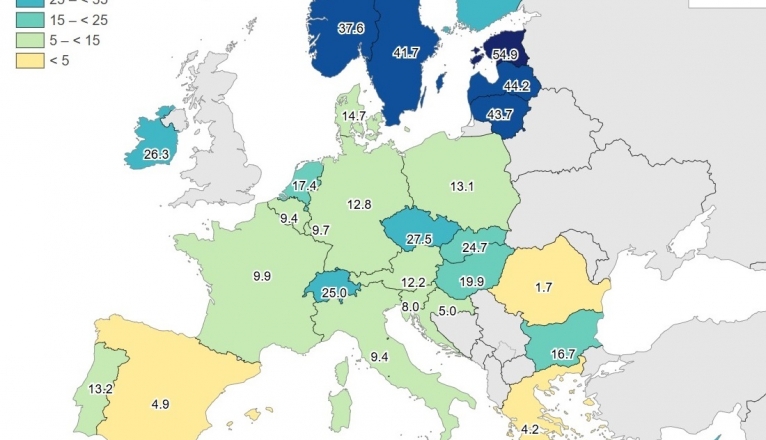
According to the latest survey on the European labor force, most people who retire in the old continent stop working, but 13% remain in their jobs, although there are huge differences between countries.
Spain is one of the European countries with the fewest retirees working. In fact, only 4.9% of Spanish pensioners maintain a professional activity once they reach retirement age. Behind Spain are only Romania (1.7%) and Greece (4.2%).
There are also not many retirees working in Croatia (5%) and Slovenia (8%) or in the large economies of the Eurozone such as Italy (9.4%), France (9.8%) and Germany (12.8%), which almost reaches the community average.
The highest proportion of retirees who continue working is found in the Baltic countries, where about half are still part of the labor force: Estonia (54.9%), Latvia (44.2%) and Lithuania (43.7%).
The reasons for Europeans to continue working
The main reason given by Europeans for continuing to work after receiving their first pension is because "they liked working and being productive”. This is stated by 36.3% of Europeans who continue working after retiring.
Also the “economic necessity” plays a relevant role for many, specifically 28.6% of the respondents chose this reason.
In addition, 11.2% mentioned the desire to maintain the social integration that employment implies and the economic attractiveness of work (9.1%). A smaller proportion, 3.5%, decided to continue because their partner was still working.
Among those who continued employed, approximately half continued as before retiring, while for the other half there were changes, such as another job or fewer hours than before the pension.



Add La Voz de Lanzarote as a preferred Google source.
Stay informed with the latest current news.