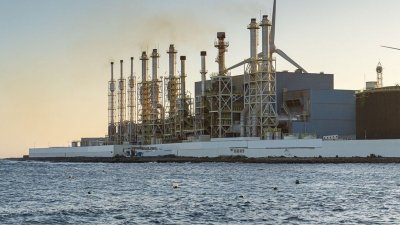
The Ministry for Ecological Transition and the Demographic Challenge has selected the awardees for the renovation of the Canary Islands' power plant fleet, a provisional decision still pending allegations from the parties and its subsequent publication in the Official State Gazette (BOE).
**Until now, Endesa was the only** company awarded a contract in the archipelago. The ministry **has provisionally selected three companies, Disa, Satocan, and Endesa**, to renew 62 thermal generation units on the islandsEndesa has been selected in two ways: through **Gas y Electricidad Generación (GESA) and with Unelco and Endesa Generación**. But **Sampol Ingeniería y Obras** was also selected, as well as **Disa y Canary Carreteras**, created by the Satocan Group
According to data from Red Eléctrica - the system operator - of the 97 thermal power units existing in the archipelago, sixty are over 25 years old, 34 of them are over 35 years old, and thirteen are over 45 years old. The oldest ones generate 1,114 megawatts out of the 2,355 available, almost half of the total power for the islands.
With this measure, possible after a long and complex negotiation by the Ministry for Ecological Transition and the Demographic Challenge (MITECO) with the European Commission, the base power of the island systems will be modernized, allowing for the acceleration of other measures that contribute to the resilience of the system and, in particular, renewable energy penetration.
The provisional resolution contemplates the entry of 215 megawatts into the Lanzarote-Fuerteventura subsystem, 330 in Gran Canaria, 379 in Tenerife, 44 in La Palma, 5.5 in La Gomera, and 6.5 in El Hierro.
It is estimated that renewing the thermal generation park in Lanzarote-Fuerteventura would involve more than 300 million euros in investment and 700 jobs
For the entire archipelago, an investment of approximately 1.4 billion and 2,700 jobs is projected.
The tender, announced in July 2024, affects the remuneration scheme for electricity generators in these territories, where the production of electricity is more expensive than on the mainland. This additional cost is shared 50% between the general state budgets and the electricity system, so that the price of electricity is the same throughout Spain.
This overcost in 2024 was close to 1.8 billion euros, compared to 1.5 billion the previous year, according to data from the National Markets and Competition Commission (CNMC).



Add La Voz de Lanzarote as a preferred Google source.
Stay informed with the latest current news.