
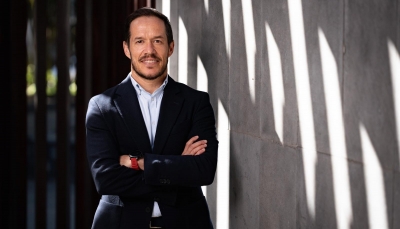
The Ministry of Ecological Transition and Energy of the Government of the Canary Islands, led by Mariano H. Zapata, opens to public consultation the draft decree that will regulate local participation in the development of renewable wind and photovoltaic projects on land, so that both citizens and stakeholders can make their contributions to the text.
This is one of the actions contemplated in the new Climate Change and Energy Transition Law of the Canary Islands, ratified in the Parliament of the Canary Islands last June, and which includes the possibility for citizens to participate in the new renewable energy facilities on land that are developed in the islands of more than 2 MW of power and up to 20% of the total amount of the project. Such participation may be made through shareholding or financing (crowdfunding).
The Minister recalled that this is not the first public consultation that has been carried out, as "a public consultation was already carried out last September prior to its drafting, and which was also previously discussed with the agents involved, including councils and the Canarian Federation of Municipalities (FECAM)". According to the Minister, these contributions have been answered, "many of them being included in the draft text that we are now presenting, in this second public hearing, which will be open until next Monday, January 29 through the citizen participation portal".
In this sense, he wanted to emphasize that this draft is a participated and worked text, both with councils and with town councils as well as with the private sector and the rest of the agents involved. "Before taking it to public consultation, we presented it previously at the Table of the Demographic Challenge and it has also been widely debated at the Table of Renewable Energy, led by this Ministry".
The Minister also recalled that this is a pioneering document in Spain, since, "although some autonomous communities have included this citizen participation in their regulations, none has developed it in the form of regulations". A measure that, in addition, "aligns us with European guidelines that promote this public participation," he stressed.
For all these reasons, Zapata described this text as "highly beneficial to increase the penetration and acceptance of clean energy", as well as "an opportunity for the future of the Canary Islands, where citizens and local institutions are a fundamental part of the change of model and a robust and cutting-edge renewable industry is generated in the archipelago, which generates wealth and employment in the islands and helps us to continue advancing in our decarbonization challenge, an urgent objective to face the climate fight".


