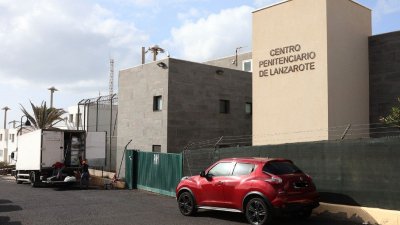
Intersindical Canaria (IC) and the Association for the Defense of Public Health of the Canary Islands have registered a written complaint before State and island institutions in which they warn of the "grave violation" of the right to health in the penitentiary centers of the archipelago.
The document, which also has the backing of the Working Group on Mental Health in Prison of the Spanish Association of Neuropsychiatry, the three organizations assure that it is a "humanitarian and legal emergency", as reflected in the reports of the Superior Prosecutor's Office of the Canary Islands and the Ombudsman, according to what they reported this Monday in a joint statement sent by the IC Health Federation.
The promoters of this complaint point out that in centers such as Las Palmas II (Gran Canaria) and Tenerife II, the deficit of medical personnel has reached more than 70% of the positions, so there are modules without in-person medical supervision.
The lack of in-person doctors causes situations they consider "unacceptable", such as attention by video call for complex pathologies, the impossibility of monitoring chronic diseases —such as diabetes, HIV or hepatitis— and a mental health management based almost exclusively on pharmacological containment in the absence of psychiatrists, the three organizations have pointed out.
"Prisons are becoming powder kegs," these organizations have stressed, recalling that "deprivation of liberty cannot mean deprivation of public health, as guaranteed by the Spanish Constitution and the General Penitentiary Law."
For all these reasons, they demand "immediate" transfer of prison healthcare to the Canary Islands Health Service, pending for more than two decades according to Law 16/2003, and dedicated funding from the State to allow for salary equalization of prison professionals with Primary Care, understanding that it is an essential condition to fill vacant positions.
They demand a strategic mental health plan
Furthermore, they demand an Intramural Mental Health Strategic Plan, with permanent multidisciplinary teams that work in network with the area's mental health services and technological and infrastructure modernization, especially in Santa Cruz de La Palma and Tenerife II, with advanced telemedicine systems coordinated with reference hospitals.
In parallel, they request the creation of a permanent monitoring committee, with the participation of the administration, workers, and human rights observers, to audit monthly the care ratios and waiting times.
The signatory organizations of the document have emphasized that serving a sentence "cannot become a death sentence due to the State's neglect."



Add La Voz de Lanzarote as a preferred Google source.
Stay informed with the latest current news.