The Government of the Canary Islands defends the Law on Sustainable Planning of Tourist Use of Housing against the arguments contained in the report of the National Markets and Competition Commission (CNMC).
In their opinion, this commission ignores fundamental aspects such as the right to housing, the protection of the urban environment and the quality of life of residents, and focuses exclusively on market criteria, the Ministry of Tourism and Employment states in a statement.
The regional Executive has recalled that the report, requested voluntarily and without binding nature, formulates proposals that do not address the complex reality of the islands or the housing emergency situation declared in the archipelago.
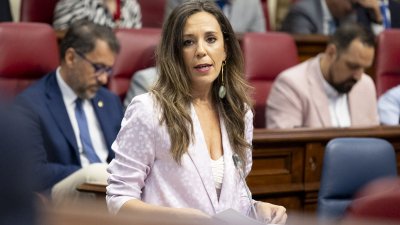
In this sense, “the CNMC overlooks that the tourism growth model of the Canary Islands must be compatible with the well-being of citizens, the sustainability of the territory and the preservation of local identity”, emphasizes the Minister of Tourism and Employment, Jéssica de León.
De León highlights that the Supreme Court (TS) strongly rejected the complaint filed by the CNMC against the city of Bilbao for having delimited - in the exercise of its powers - the activity of vacation housing.
“The judicial body clarified that Public Administrations must avoid gentrification and prevent cities from becoming a 'theme park', instead of a habitable and convivial space’”, she explains.
The Constitutional Court and the Court of Justice of the European Union have also ruled in the same sense, stating that the regulation of vacation housing does not violate the right to private property, but is within the limits necessary to guarantee the general interest.
De León presented aspects of the report that she does not consider acceptable. Among them, “the CNMC proposes that Officially Protected Housing (VPO) can be used for vacation rentals, a position that we discard from the Government”.
In this regard, she emphasizes that “VPO are an essential resource to guarantee access to housing for the most vulnerable families and have been financed, in whole or in part, with public money”.
Likewise, the document includes other contributions, “such as that vacation rentals can continue to grow even in areas where housing is a scarce commodity”, something that the Government of the Canary Islands sees “with deep concern”, the note states.
It also proposes that this modality can be implemented in premises that were converted into homes to address the lack of residential supply, and defends that vacation homes can be established in protected areas, where only rural tourism is allowed.
“Rural accommodations are subject to very strict regulations with the aim of preserving the natural space in which they are located. In these areas, the proliferation of vacation homes could endanger the conservation of the Natura 2000 Network and biodiversity”, assures the Minister.
She also regrets that “the CNMC suggests modifying the accessibility criteria to make them more flexible”.
In this regard, the Minister points out that “we strongly oppose, because accessibility is not a privilege, but a fundamental right that cannot be negotiated”.
In addition, the document criticizes that 90% of the buildability is allocated to residents, and 10% is set for tourist use.
“From the regional Executive we defend that this limit is an essential tool to guarantee that housing continues to fulfill its social function”, said the Minister, recalling that “in the green islands, where tourist pressure is lower, the percentage allocated to vacation housing can reach up to 20%”, says the Minister.
Some of these arguments were questioned by the particular vote of one of the members of the commission, who indicated that the measures of the bill are justified in terms of necessity and proportionality, to guarantee access to residential housing in the Canary Islands.
De León remarks that the text of the Law on Sustainable Planning of Tourist Use of Housing has been endorsed by the legal services of the Government of the Canary Islands, by a report from the Government of Spain, and by the Advisory Council, which validated the essential principles of the norm and its central structure.
It also pronounces in the same terms as the judgments issued by the Supreme Court (TS), the Constitutional Court (TC), the Court of Justice of the European Union (TJUE), as well as in line with the sustainability principles established by the European Parliament.



Add La Voz de Lanzarote as a preferred Google source.
Stay informed with the latest current news.