
Casas Heddy bets on health tourismScandinavian developers were the earliest. In the late sixties and seventies, they began to take an interest in developing tourist projects: in Arrieta, a project was undertaken to build a bungalow complex in the town, which remained unfinished. In Famara, the Norwegian Per Ornulf-Oien developed the first bungalow development on Lanzarote. "Island Homes," better known as Los Noruegos. In Puerto del Carmen, Mr. Myre developed the "El Dorado" apartments. The "Panorama" apartments were built with Norwegian capital using industrialized construction in 1973. In Playa Blanca, first the Danish investor Neil Prahm, then a Norwegian company director, Trygue Brudevol, and the executive from Trom, Jorstad, developed the ambitious "Plan Parcial Montaña Roja" project. In La Santa, the work was promoted by PROTUCASA, a Canarian public company, and in 1983 they sold it to a Danish company, "La Santa Sport." This complex is successfully dedicated to sports tourism. Kenneth Gasgue, a resident of Los Mojones, will promote the creation of IRONMAN Lanzarote, which will be the most important sporting event and has put us on the map.
At the end of World War II, Mrs. Heddy Astrund began organizing bus trips to Southern Europe for soldiers affected by the war and with mobility difficulties, fleeing the cold Nordic winters. Europe did not have adapted facilities for INCLUSIVE tourism. Promoter Neil Prham appeared in Norway, publicizing the qualities of Lanzarote: first, its proximity, five and a half hours by plane, its paradisiacal beaches, volcanoes, unique agricultural landscape, and he spoke to her about his project in Los Mojones to convince her and create Casas Heddy in Lanzarote.
Los Mojones was a good area on the coast of Tías dedicated to tomato cultivation until it began to be used for tourism. Neil Prhm brought his countryman Per Bjon Cristensen, an expert in urban planning and industrial design. He designed the "adapted houses" for good internal and external mobility. Recovery rooms and a central pool with a ramp and beach sand. Despite the global oil crisis of 1972. Casas Heddy opened its doors in October 1975 and had a maximum capacity of 60 places. For the development, plots were designed in their natural state, irregular plots following their agricultural use, local stones and walls with dirt agricultural paths and trails.
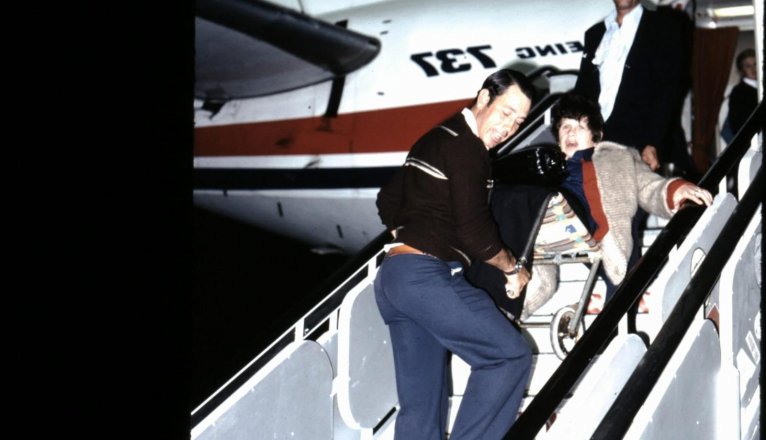
The management chose and trained municipal workers; the nurses and physiotherapists came from Norway, accompanying them on the Oslo-Lanzarote trip. The work ties were so strong that new intercontinental couples even formed. At the airport, when these fortnightly trips arrived, it was quite a spectacle. Heddy's home workers wore original attire; special clients were brought down one by one, helped by a small chair, with great skill and strength from these employees. Their suitcases and chairs went directly to the truck located at the foot of the stairs, and the passengers boarded the adapted bus located on the tarmac.
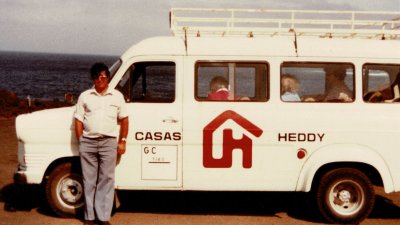
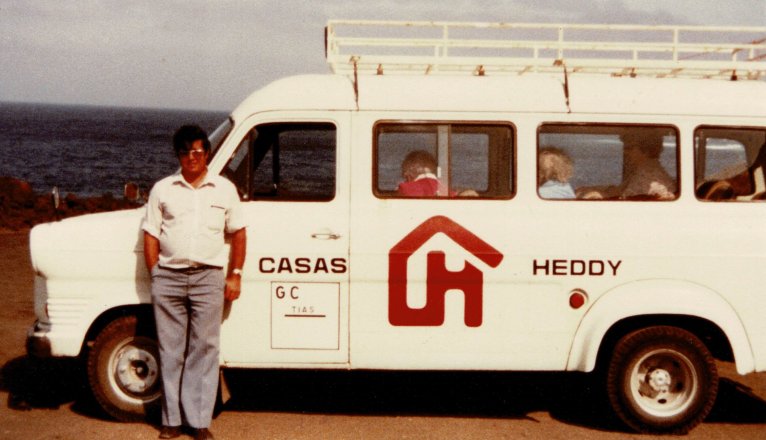
Since 1975, Casas Heddy has been very committed to ensuring inclusion in its facilities and also had its own vehicles for adapted mobility for transfers. The administration of Casas Heddy encountered many difficulties in legalizing and using these vehicles. During the fortnightly stay of these "special tourists," they went on outings to the tourist centers that existed at that time, one per day, trips to the beaches, to farms, and to nightlife. The establishment had a packed schedule of activities, meetings with folklore groups, barbecues, and other entertainment.
From the inaugural event of Casas Heddy in October 1975, according to the newspaper “El Eco de Canarias,” its correspondent, Aureliano Montero, notes that Mrs. Heddy Astrund herself attended, along with the Consul of Norway, the local administrator Domingo Lorenzo García, and no local authorities.
Add La Voz de Lanzarote as a preferred Google source.
Stay informed with the latest current news.