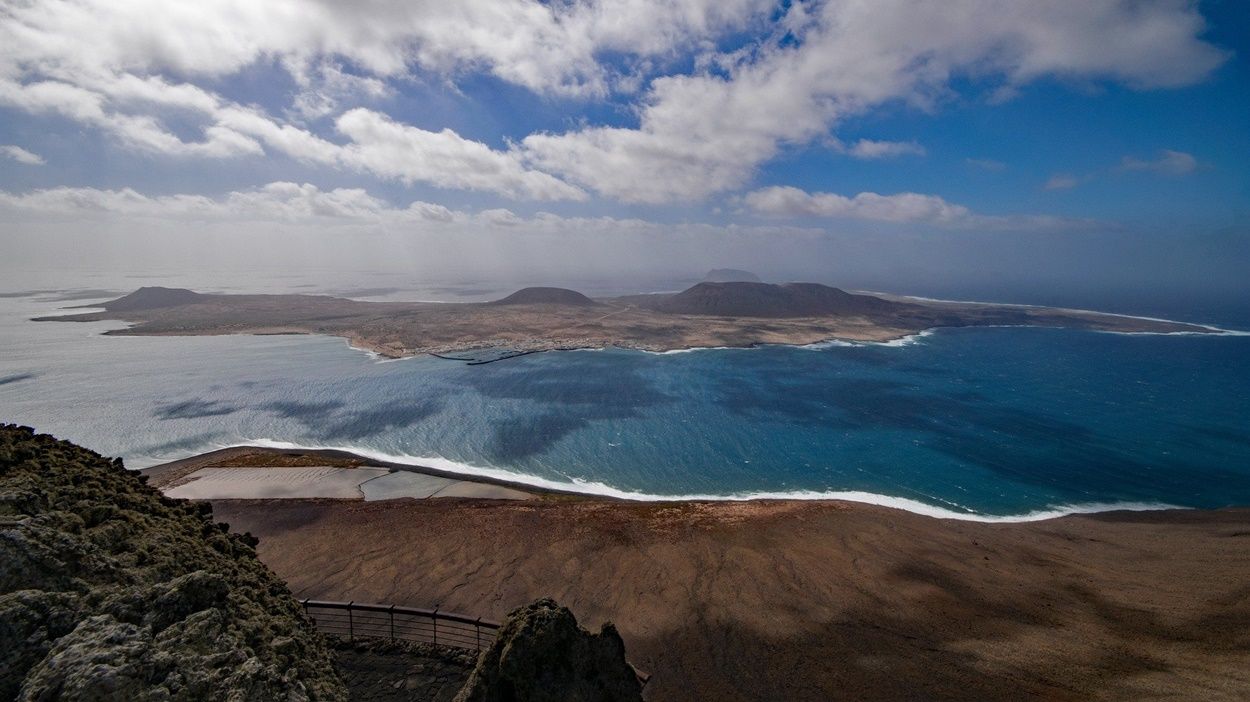
The Autonomous Environmental Assessment Commission, under the Ministry of Territorial Policy, Sustainability and Security of the Government of the Canary Islands, has given the green light to 26 projects that are intended to be carried out in the area of influence of the Chinijo Archipelago. In total, this body has held two meetings so far this month and has reviewed 27 projects, of which only one received an unfavorable report "because it is considered to cause a transformation of the physical, geological and biological reality of the affected area", since it contemplated the construction of a swimming pool, garage and enclosures in Famara.
Among the 26 files processed favorably, according to the regional Executive, there are 12 related to the implementation of self-consumption photovoltaic installations, which were positively informed, "in order to guarantee the speed of the projects".
The remaining 14 projects that have been positively informed correspond to actions of different kinds both in Caleta de Famara (7) and in La Graciosa (7). Eight are related to the construction or modification of homes; two with the grouping and / or segregation of plots; two others with reforms; one with the reform of parapets and another with a physical support infrastructure for telecommunications networks.
The Councilor responsible for the Area, José Antonio Valbuena, defended "the effort being made to coordinate the different administrations involved with the aim of speeding up the procedures" and highlighted as an example the agreement adopted to exclude certain actions from having to carry out the prior consultation procedure before the environmental body, seeking a "better service to the general interest".
“We are working to achieve a balance between the necessary protection of spaces of great value, such as the Chinijo Archipelago, and agility in responding to the projects presented by citizens,” said Valbuena, who explained that he has exempted from the prior consultation procedure interior works, change of carpentry or installation of thermal insulation or solar panels on the roof of existing buildings. “In short, works that do not cause that transformation that the legislation intends to protect through the application of the precautionary regime and that can be included within fixed assumptions that would guarantee the agility and speed of the procedure for the benefit of the general interest, as well as compliance with the legal precepts stated.”
The Autonomous Environmental Assessment Commission has sent the reports of the 27 files to the Teguise City Council, which is, in this case, the local Administration competent to grant the corresponding licenses.


Add La Voz de Lanzarote as a preferred Google source.
Stay informed with the latest current news.