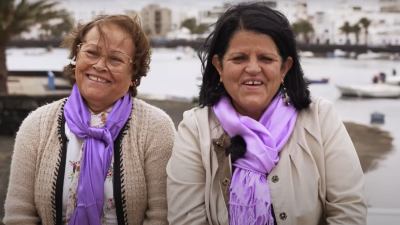
Coinciding with International Women's Day, the Cabildo of Lanzarote has launched a video in tribute to the thousands of women who worked in the island's canning factories. An audiovisual document that culminates with the presentation of a sculpture in their honor, by the artist Cintia Machín, which will be installed in May.
“It is only fair that this March 8 we remember the fundamental role that women have played in Lanzarote society and especially the canning women, who sustained the island's economy and were indispensable in guaranteeing the survival of many families,” says the president of the Cabildo, María Dolores Corujo.
“These women not only sustained a large part of the island's economy in labor conditions quite far from those we enjoy today, but their inclusion in productive work represented a great advance, with an important impact on the feminist struggle,” adds the Councilor for Equality, Myriam Barros.
In this sense, the Councilor for Social Rights of the first island corporation, Isabel Martín, recalls that in the 60s up to five canning factories were set up in Lanzarote, each with a large number of women on its staff. Thus, she points out that “if there is an industry in which women have been the protagonist, it is the canning industry”, indicating that “an average of 80% of female employment was concentrated in this sector”.
For all these reasons, although this March 8 is dedicated “to each and every one of the women who have fought and fight for equality”, the Cabildo wanted to give special recognition to those who worked in the canning factories chatting with María (Malena) and Esperanza, two of those thousands of women “who occupied their first job and who have been invisible for a long time”.



Add La Voz de Lanzarote as a preferred Google source.
Stay informed with the latest current news.