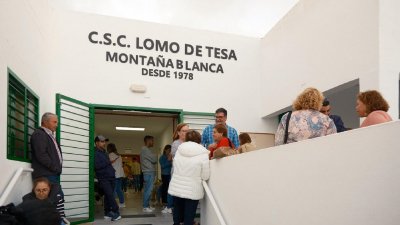
The San Bartolomé City Council advances in the identification of different municipal spaces that can function as climate shelters, with the aim of integrating them into a strategic autonomous network destined to protect the population against extreme heat episodes and to reinforce adaptation policies to climate change.
This initiative will allow to locate and enable accessible, safe, and adequate public spaces so that the citizenry can take shelter during heat waves, especially the most vulnerable groups.
The mayor of San Bartolomé, Isidro Pérez, has highlighted that this project “represents an important step to continue building a more resilient municipality against the effects of climate change, putting public resources at the service of the protection and well-being of the citizenry”.
In this regard, the mayor highlighted that “the creation of this network of climate shelters will allow to reduce health risks associated with heatwaves, especially among older people, minors or those with more sensitive health conditions, while reinforcing the municipality's commitment to sustainability and climate adaptation policies.”
For his part, the Councillor for Citizen Participation, Fernando Vadillo, explained that the City Council is working on the collection of information and characteristics of the municipal spaces that could form part of this network, with the aim of guaranteeing that they comply with the necessary requirements in terms of accessibility, security, and services.
“The collaboration between the different municipal areas and the involved centers is being fundamental to identify the most suitable places and put them at the service of the community. Our objective is that these spaces are clearly identified and accessible for the entire population when necessary,” Vadillo pointed out.
Teleclubs and other public spaces
Among the municipal spaces evaluated are several socio-cultural centers, day centers, sports facilities and civic facilities of the municipality, such as the socio-cultural centers of Güime, El Islote and Lomo de Tesa (Montaña Blanca), the Civic Center of Playa Honda, the Sports Center of Playa Honda or the day centers for seniors of Playa Honda and San Bartolomé, among others.
The councilor adds that participation in this initiative “will allow San Bartolomé to be part of a strategic autonomous network of climate shelters, reinforcing the visibility of the municipality in public policies for adaptation to climate change and directly contributing to improving the quality of life of our neighbors”.
Initiatives to face climate change
This action is also part of a transversal municipal strategy aimed at addressing the effects of climate change from different management areas. In this regard, the San Bartolomé City Council has been promoting complementary measures such as the renaturalization of public spaces, with the incorporation of new green areas and shaded areas, as well as the replanting of plant species in different parts of the municipality, in coordination with the Public Services area.
In addition to the reduction of health risks during heatwaves, the implementation of this network will represent a reinforcement of the municipal commitment to climate adaptation, while favoring a direct improvement in the well-being of citizens through the availability of safe and accessible spaces in times of extreme temperatures. All of this in coherence with a municipal planning that integrates environmental, social, and urban actions to advance towards a more sustainable, resilient, and livable municipality model.
The City Council continues working on the collection of technical data from the different municipal spaces, including information on schedules, capacities, available services, security measures, and staff, with the aim of completing the necessary forms for their integration into the autonomous network of climate shelters.
Add La Voz de Lanzarote as a preferred Google source.
Stay informed with the latest current news.