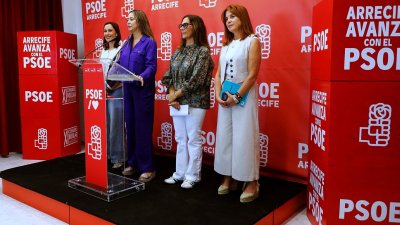
The PSOE [Spanish Socialist Workers' Party] of the Canary Islands has denounced the progressive "dismantling" of the dependency care system in the archipelago, accusing the regional government of using falsified figures to hide its lack of management and the abandonment of the most vulnerable people.
According to data presented at the press conference held this Thursday in Arrecife, as of August, there are 11,400 Canary Islanders with non-effective benefits, that is, with an approved PIA (Individual Care Program) but without actual service. Between July and August alone, the CC and PP Executive issued 3,161 new resolutions without effective provision, which places the Canary Islands as the autonomous community with the highest percentage of fictitious aid: 21.55% compared to 1.99% nationally.
The Secretary of Organization of the PSOE of the Canary Islands and regional deputy, Nira Fierro, was blunt about it: "We are facing a Government of trickery and lies, which has hidden people under the rug to manipulate the figures. The regional Executive intends to improve its statistics by lying to the public, erasing from the system those who need help the most."
Fierro recalled that in the Canary Islands, 23% of people remain on the waiting list, compared to 1% in the country as a whole. "Instead of reinforcing care and reducing waiting times, they have chosen to cut back, eliminate files, and manipulate the data," he added.
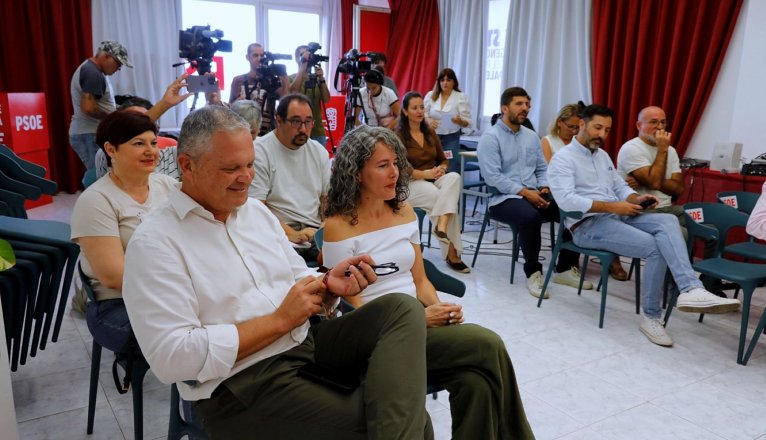
For her part, the Secretary-General of the PSOE of Lanzarote and member of Congress, María Dolores Corujo, warned that "the socialist group wanted to clarify the limbo in which thousands of dependent people in the Canary Islands find themselves, a problem that requires determination and an explicit denunciation." "The same Government of the Canary Islands that fails to execute more than 1.7 billion euros and rejects the forgiveness of 50% of the debt, has abandoned the most vulnerable people in our society, precisely those who most need the protection of the system," Corujo stated.
Senator Marta Arocha, who was Director-General of Dependency under the government of Ángel Víctor Torres, added that "they are dismantling the public service and establishing a private model, in which families have to search on their own for companies that do not even exist on many islands."
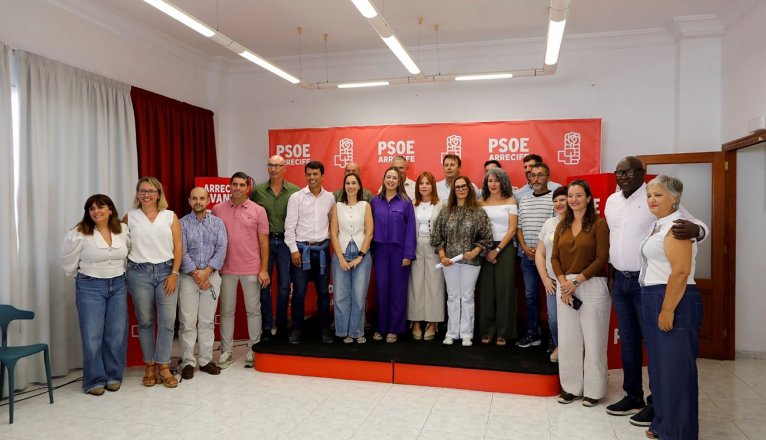
The brakes came on with CC and PP
Arocha detailed that in 2022, under the Government of Ángel Víctor Torres and María Dolores Corujo, 232,000 hours of promoting personal autonomy and more than 200,000 hours of home help were achieved in Lanzarote, consolidating a public model that grew each year. "In 2023, with the arrival of the Canary Islands Coalition and the Popular Party government, the system was completely halted and the year closed without significant progress," she lamented.
The senator also recalled that the investment data clearly reflect the current decline: “While in 2018 the Government of the Canary Islands allocated 9 million euros to the dependency agreement, in 2022, under the leadership of Ángel Víctor Torres and María Dolores Corujo, the agreement reached 21 million euros. In 2024, with Clavijo and Betancort in the Government, the agreement has not even been signed. There is no management, no commitment, and no sensitivity towards dependent people.”
Arocha emphasized that the work plan promoted during his administration aimed to achieve a zero waiting list in two years and consolidate a true culture of care, based on dignity, social justice, and public attention.


Add La Voz de Lanzarote as a preferred Google source.
Stay informed with the latest current news.