
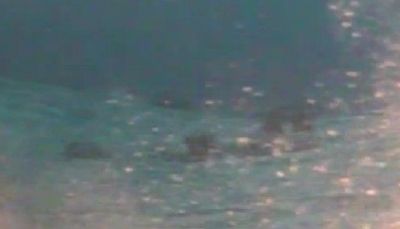
A team from the CSIC and the IGN, with the collaboration of the crew of the Salvamar Adhara, of Maritime Rescue, has obtained new images of the underwater volcano of El Hierro and the degassing process that is observed in the shallowest area of the volcanic edifice. "The images show that intense degassing continues, of which manifestations are often recognized on the surface of the sea (bubbling and greenish coloration) due to the ascent of gases to the surface of the sea," they explain.
Repeated filming has been carried out in the area at control points to qualitatively assess the evolution of the degassing process. The recorded images recognize "the typical morphologies of underwater volcanic rocks and also morphologies that correspond to volcanic cones and craters."
The filming, which has been carried out systematically, has allowed the CSIC-IGN team to identify different types of lavas and volcanic deposits, as well as characterize the different areas of the volcanic edifice. Punctually, in areas of intense gas emission, some dead fish have been identified in the images at the bottom.
The underwater camera used is of Spanish manufacture and its design, resistant to gases and temperature in the work area, has been adapted to the needs of the investigation, in an area with pronounced and irregular reliefs.


