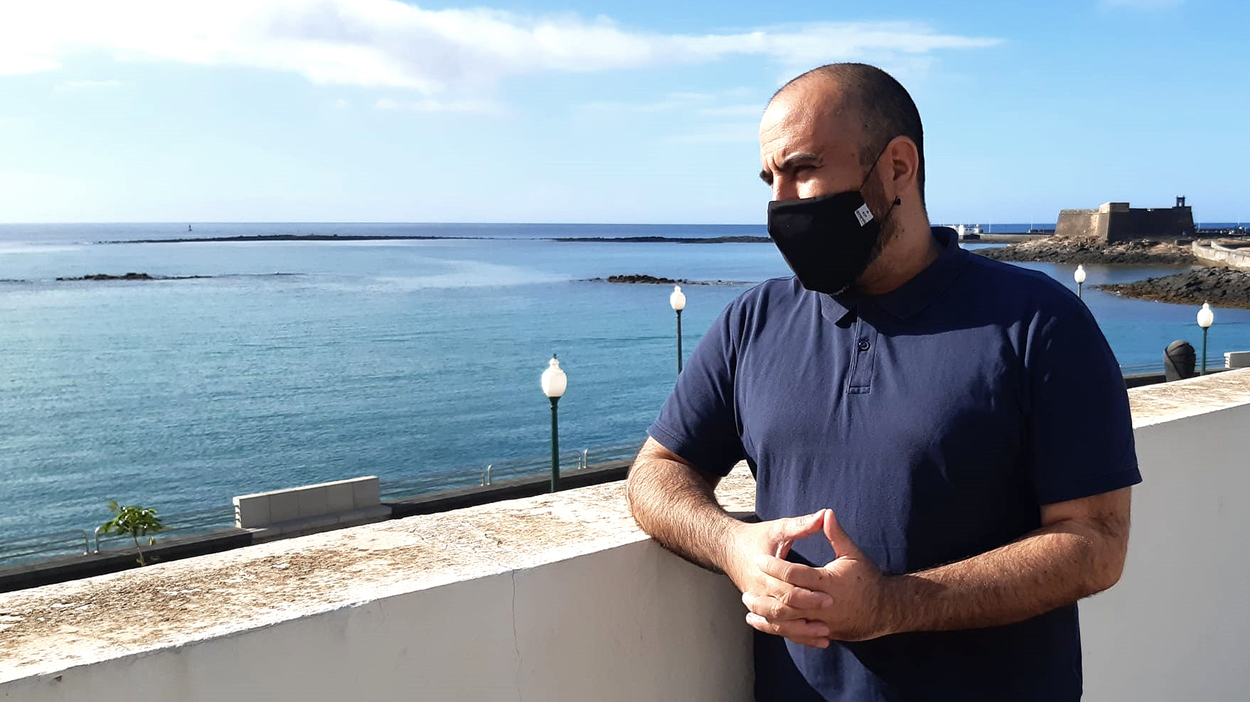
The municipal group of Lanzarote En Pie in the Arrecife City Council has urged the mayoress, Ástrid Pérez, to comment on the approval of the detailed management of the LZ-2 Aquaculture Interest Zone by the Government of the Canary Islands, which establishes up to five areas of interest for aquaculture in Lanzarote: three in Playa Blanca, another between Las Cucharas beach in Costa Teguise and the Islote del Francés in Arrecife and the fifth between La Bufona and Punta de El Barranquillo.
In this context, Lanzarote En Pie regrets that "Arrecife is the only affected municipality that has not yet spoken out about the implementation of marine cages off its coasts", being, as it is proposed, "an activity that will seriously damage the coastline from a tourist, environmental and landscape point of view, as demonstrated by the negative experience of the cages installed off Playa Quemada in the municipality of Yaiza".
Leandro Delgado, councillor of the municipal coalition, considers that "the government group is behind schedule on this issue" and that "it is urgent to take a position on the matter, especially when the ordinance on the use and management of the Arrecife coastline is in the process of being approved."
"Serious and foreseeable damages"
From Lanzarote En Pie they maintain that "the massification of fish in cages facilitates the spread of infectious diseases whose treatment and prevention requires a wide range of curative and preventive methods that causes the accumulation of antibiotics in the internal organs of the fish and therefore, the risk of environmental contamination that would have a high impact on the ecosystem and on the consumers themselves".
Another negative aspect for native species "would be the escape of captive fish through cage breakages, contributing to the imbalance of the area by spreading diseases or acting as uncontrolled predators", they indicate.
They also point out that "organic contamination, produced by the discharge of uneaten feed and fish waste, affects the ecosystem closest to the fish farm". Overall, "around 85% of the phosphorus, 80% of the carbon and 52% of the nitrogen introduced into the cages through food, fish excretions and respiration acidifies the marine environment", they detail.
Finally, they state that "the structures and all the floating devices that maintain and indicate the location of the cages (floats, buoys, etc.) represent an undoubted landscape impact on the area, as well as a risk for seabirds that often die entangled in the protective meshes".
"Aquaculture is an activity that in certain contexts can be an alternative, being viable only when its production is subject to the concept of sustainable development and in this case, it is not", says Leandro Delgado.
For all these reasons, the Lanzarote En Pie municipal group requests the parties that form the Arrecife government pact "to defend the environmental interests of the municipality" and "to firmly oppose a decree that will generate serious and foreseeable damages to the marine ecosystem, the quality of its waters and also a negative economic and landscape impact on the Arrecife coastline".


Add La Voz de Lanzarote as a preferred Google source.
Stay informed with the latest current news.