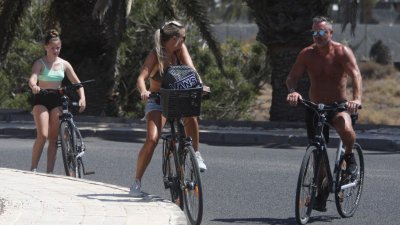
The General Directorate of Public Health of the Canary Islands Health Service (SCS), after updating the forecasts provided by the State Meteorological Agency (AEMET), has updated the health risk warnings for the current episode of extreme temperatures. The episode is expected to extend from tomorrow, September 17, to the islands of Lanzarote and El Hierro, while the warnings already active since yesterday in areas of Tenerife, Gran Canaria and La Palma are extended.
According to the updated forecast, the active warning for the metropolitan area of Tenerife has been raised to red, and orange warnings have been activated in the west of La Palma and El Hierro, and yellow in Lanzarote and north of Tenerife. The yellow warning in force since yesterday in Gran Canaria and the eastern area of La Palma is also maintained.
Therefore, the warnings currently active in the Canary Islands are as follows:
Red level warning (high risk):
-
Tenerife- Metropolitan area: Santa Cruz de Tenerife, San Cristóbal de La Laguna, Candelaria, Tegueste, Tacoronte, El Rosario.
Orange level warning (medium risk):
-
La Palma- East area of La Palma: Fuencaliente de la Palma, Garafía, Los Llanos de Aridane, Puntagorda, Tazacorte and Tijarafe; and summit area of La Palma (El Paso).
-
El Hierro: Frontera, Valverde and El Pinar de El Hierro.
Yellow level (low risk):
-
La Palma- East area: (Barlovento, Breña Alta, Breña Baja, Puntallana, San Andrés y Sauces, Santa Cruz de La Palma and Villa de Mazo); Summit area of La Palma (El Paso).
-
Gran Canaria- East, West and South areas (Agüimes, Artenara, Ingenio, Mogán, San Bartolomé de Tirajana, Aldea de San Nicolás, Santa Lucía de Tirajana, Telde, Valsequillo de Gran Canaria); and Summit area of Gran Canaria (Tejeda and Vega de San Mateo).
-
Tenerife- North area: Buenavista del Norte, Garachico, La Guancha, Icod de los Vinos, Matanza de Acentejo, La Orotava, La Puerto de la Cruz, Los Realejos, San Juan de la Rambla, Santa Úrsula, El Sauzal, Los Silos, El Tanque and La Victoria de Acentejo.
-
Lanzarote: Arrecife, Haría, San Bartolomé, Teguise, Tías, Tinajo and Yaiza.
It is expected that the temperature thresholds will be exceeded in the indicated meteo-health areas and maximum temperatures of up to 38º C are expected, with Thursday, September 18 being estimated as the day of greatest risk. The most significant risk municipalities will be: San Bartolomé (Lanzarote), San Bartolomé de Tirajana and Santa Lucía de Tirajana (Gran Canaria), Frontera (El Hierro), Santa Cruz (Tenerife), Tazacorte (La Palma), which increases the risk of heat stroke and other health problems, especially in sensitive and vulnerable populations.
The forecast is that the episode that has already started this Tuesday, September 16 and the warnings in the aforementioned areas, will last at least until Saturday, September 20.
In any case, the most up-to-date evolution will be available at the following web address:https://www.sanidad.gob.es/excesoTemperaturas2025/meteosalud.do
Recommendations
By virtue of these warnings, the General Directorate of Public Health of the SCS reminds the population of the main recommendations to deal with these high temperatures
Sensitive and vulnerable population:
-
-
Infants and children under 4 years of age, pregnant women and adults >65 years of age.
-
People with previous respiratory, cardiovascular, kidney, hypertension diseases.
-
People with chronic diseases: diabetes mellitus, morbid obesity.
-
People with certain pharmacological treatments: diuretics, laxatives, neuroleptics, anticholinergics, benzodiazepines.
-
People with cognitive deficits or lack of autonomy.
-
People who consume alcohol or other drugs.
-
People who perform intense physical activity outdoors.
-
People who live alone, homeless.
-
People with high exposure to heat for work, sports, leisure or tourism reasons.
-
Probable symptoms:
Intense thirst, weakness, general malaise, dizziness, fatigue, nausea, headache, muscle cramps, fever or lower than normal temperature, palpitations. And symptoms that indicate severity: fainting, seizures, coma.
Recommendations for the general population and especially for the sensitive population:
-
Avoid dehydration: drink water and fluids without waiting to be thirsty. Avoid caffeine, sugary and energy drinks and alcohol.
-
Mainly ingest light meals, such as salads, vegetables and fruits, avoiding fats and heavy meals.
-
Take care of fragile and vulnerable people, especially children, pregnant women and the elderly.
-
Protect yourself from the heat:
-
-
Outdoors: avoid exposure to the sun in the central hours of the day, wear loose clothing, plan intense physical activity first thing in the morning or late in the afternoon, and consult the weather forecast when doing outdoor activities.
-
-
-
Reschedule the hours of outdoor work activities.
-
Indoors: cool the rooms in the extreme hours of the day, avoid the use of appliances that produce heat in the central hours, cool the body with fresh water. Prioritize staying in indoor spaces, if they are air-conditioned.
-
-
In general, limit the time spent outdoors and avoid intense or prolonged physical activities outdoors during the extreme heat episode.
-
Consult a health professional for symptoms that require immediate specialized action (weakness, fatigue, dizziness, nausea, blurred vision, fever...).
-
In case of emergency call 112.


Add La Voz de Lanzarote as a preferred Google source.
Stay informed with the latest current news.