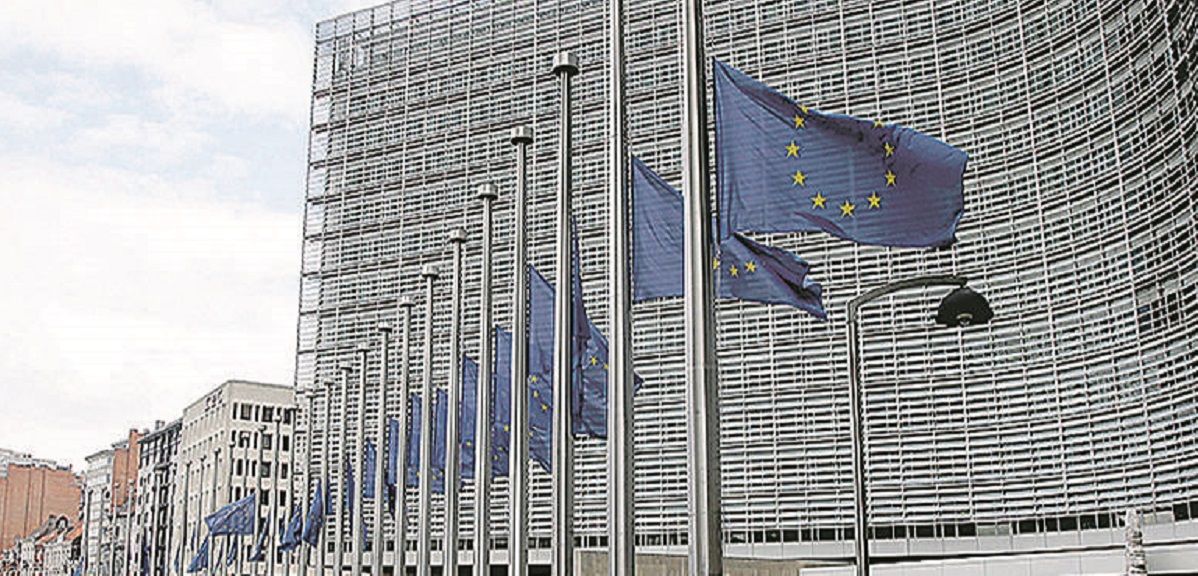
The European Commission proposed this Tuesday, June 6, a "global" action plan for the routes of the Western Mediterranean and the Atlantic. An initiative based on concrete operational projects of the European Union, with partners in Africa with whom it already has "effective cooperation", such as Morocco, Mauritania or Senegal. For routes that fully affect Spain.
The plan consists of "strengthening" cooperation with countries of origin or transit, based on "already positive relations," in order to combat the illicit trafficking of migrants and human trafficking. In addition to strengthening border management, in the return and readmission of migrants or in labor migration and talent associations, among others.
The second part of the plan rests on guaranteeing among the Twenty-seven "more effective management of borders, search and rescue and return procedures, as well as more fluid and rapid voluntary solidarity."
To promote "sustainable and structural solutions" to the migratory challenges that are at the core of the Pact on Migration and Asylum, currently in the negotiation phase and whose momentum is expected to be assumed by the Spanish presidency of the EU, from July 1.
"Migration flows remain sustained"
Brussels notes that "migration flows remain sustained", therefore, "it requires continuous monitoring and concrete operational responses, anchored in current effective cooperation," stresses the Commission, which presents this plan in view of the European summit on June 29 and 30.
The watchword is to set operational priorities "in the short term", including smuggling, in special collaboration with Morocco and with specific assistance from Global Europe, the EU's main financial tool to contribute to sustainable development and stability in the world.
Brussels also urges the launch, with that fund, of a regional program in Morocco, Tunisia and Egypt, to "increase the number of dismantled networks", as well as to collaborate with Mauritania, Senegal, Ivory Coast, Gambia, Mali, Guinea and Niger.
With the same fund, the Community Executive proposes "financing capacities in border management" of Morocco, Mauritania, Senegal and Gambia, and greater bilateral cooperation with Frontex.
At the same time, it calls for "improving the readmission and voluntary return" of "helpless" migrants in the transit and destination countries of North Africa (in particular Morocco and Algeria) and the countries of the Sahel (in particular Mauritania), increasing "financial support" and also to those of origin to help returnees, especially in Gambia, Senegal and Ivory Coast.
"Solve the bottlenecks detected so far"
Guaranteeing border management in the EU, "more effective" return procedures, preventing "deaths at sea", as well as "more fluid and rapid voluntary solidarity" are challenges that Brussels identifies internally, and urges the 27 to "solve the bottlenecks detected so far in all these areas."
For this, "reinforced support" to partner countries on the routes is necessary through possible joint operations, air and maritime surveillance or capacity development.


Add La Voz de Lanzarote as a preferred Google source.
Stay informed with the latest current news.