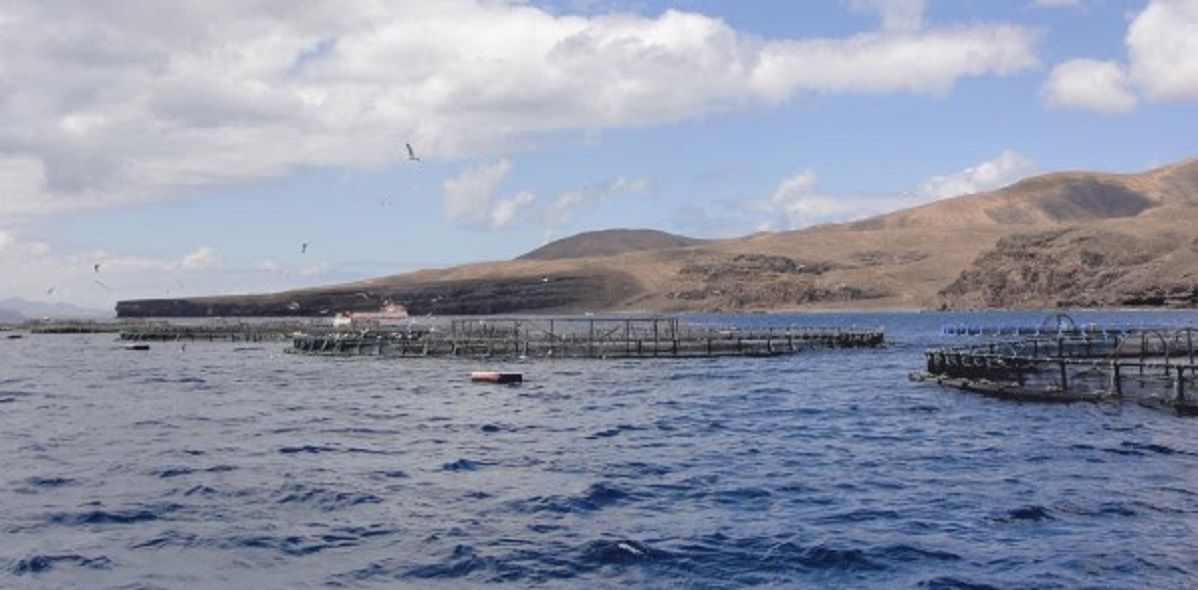
The town councils of Tías and San Bartolomé have taken to court the ordinance that authorizes the installation of marine cages throughout their coastline, from Puerto del Carmen to Arrecife, affecting three municipalities.
The first deputy mayor of San Bartolomé, Antonio Rocío, explained that they had previously filed an appeal for reconsideration with the Government of the Canary Islands and, seeing it rejected, they have filed an administrative litigation appeal in the Courts, to try to annul it.
The detailed ordering of the aquaculture interest zone between Tías and Arrecife was approved last February, although what it does is develop the Aquaculture Ordering Plan (PROAC) approved in July 2018, which was the one that defined that area for the installation of marine cages.
"We firmly believe in aquaculture," says Rocío, although he states that the Council does not agree that the areas chosen "are those with the highest residential influx", where "80% of the island's population" and "a large part of tourism" are concentrated.
In that sense, the first deputy mayor adds that in the environmental report, carried out in 2004, "it does not reflect the territorial or tourist reality", and that in it "many precepts were violated".
Rocío argues that there are alternative places for the implementation of marine cages, such as the area "from Los Ajaches to the south", where he argues that "there is no resident population or tourist presence." In addition, he adds that the transfer to the north responds to an "interest in proximity of the operating companies."
They will request a meeting with the President of the Government of the Canary Islands
"The important thing is that we have to go to one," says the first deputy mayor of San Bartolomé, who also announces that the City Council will request a meeting with the President of the Government of the Canary Islands to "try to correct" the PROAC and look for "alternative solutions." For the moment, a meeting had already been convened this Friday in the Cabildo with the affected city councils, the fishermen's associations, the Chamber of Commerce and the employers' association.
Rocío assures that there are "viable and sustainable alternatives", and that they wish to express this to the Ministry of Agriculture and Fisheries of the Canary Islands. "We are risking a lot, and for the interest of a few we cannot harm the citizens", he warns.



Add La Voz de Lanzarote as a preferred Google source.
Stay informed with the latest current news.