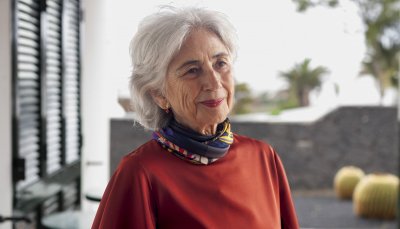
Twenty-four hours were enough for the Spanish journalist and translator Pilar del Río (Granada, 1950) and the Portuguese writer José Saramago (Portugal, 1922 - Tías, 2010) to fall in love with Lanzarote. On an express trip to the island to visit María del Río, Pilar's sister, and her brother-in-law, both considered establishing a holiday residence on the island, but that place that was going to be a temporary romance ended up becoming their permanent home.
Saramago and del Río ended up moving to Lanzarote in the nineties, after the Portuguese government censored the presentation of the book The Gospel According to Jesus Christ (1991) which had made part of the Catholic Church revolt. That exile made the island of volcanoes become the home of José Saramago and Pilar del Río and that the island irremediably crossed the Portuguese way of making literature. "Being in Lanzarote, in the dryness of Lanzarote," transformed the work of the renowned writer, "his style became denser," asserts del Río in a conversation with La Voz. Saramago died in Tías sixteen years ago and A Casa José Saramago, which the author defined as "a house made of books," has maintained his literary legacy on the island.
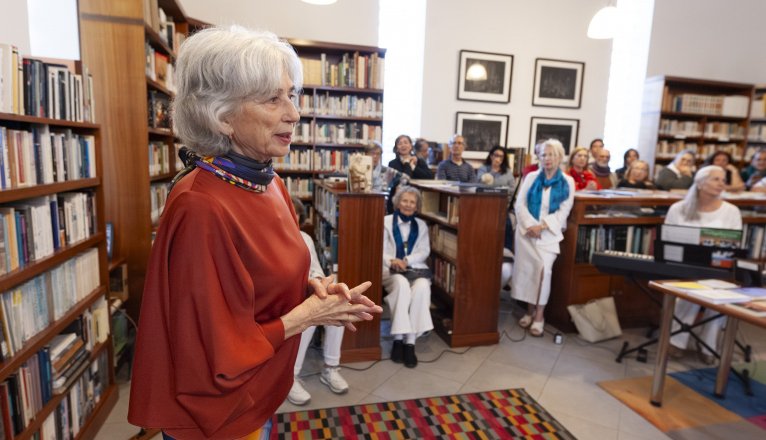
The translator speaks to this outlet on the occasion of her visit to the island for the fifteenth anniversary of A Casa José Saramago de Tías, directed by her sister María del Río and a team of "wonderful and admirable" people.
At the head of dignity
"Among the people, among those who represent me there is no conflict. We say 'no to war', in one language, in another and in another," reflects Pilar del Río. Freshly arrived from a trip to Mexico, she defends that the common people are clear about their rejection of war, despite the positions of some countries or political parties.
It is not the first time that the world has been engulfed in the darkness of war nor the first time that the population revolts against that possibility. "One must be older than Viriato to defend war," del Río shows himself forceful. To argue it, he cites great social milestones such as the Universal Declaration of Human Rights, from 1948, "of all human beings, it is not a right from here or there, or of one or another" and advocates for the principle of the United Nations: "If there is conflict, it is negotiated, it is resolved," although he considers it "stupid" to have to discuss borders.
"Sometimes news programs and information lead us down a single path, but society is much larger," highlights the also president of the José Saramago Foundation in Lisbon. "The 'no to war' is general, regardless of the strategies of some parties or some countries," she continues, "fortunately in Spain we are at the forefront of dignity."
In its defense for resolving conflicts through peaceful means, in 2015 the José Saramago Foundation, which is headquartered in Portugal, and the National Autonomous University of Mexico drafted a proposal for a Universal Charter of Duties and Obligations of Beings, which was later sent to the United Nations, among which was included the duty of all people to resolve conflicts peacefully.
Del Río states that institutions like the European Union or the United Nations Organization were created to resolve conflicts through negotiation. "And now, once again, they want us to confront each other because of the excessive ambition of beings without lights," he accuses.
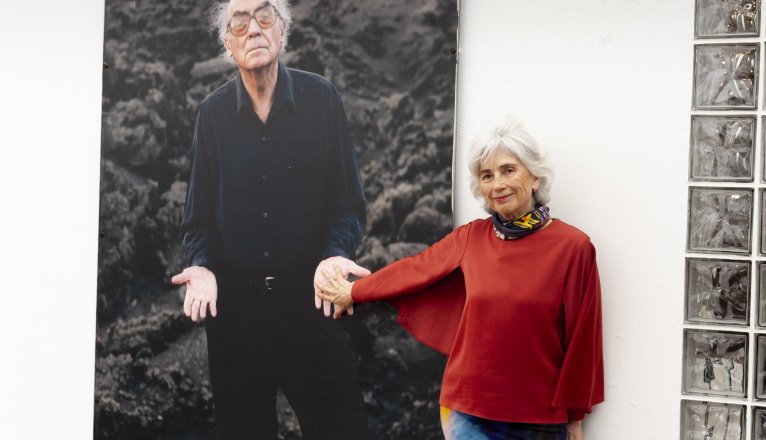
Pilar del Río: "The anti-feminists buy the discourse because they have bought into being submissive, obedient, fearful, and not straying from the path, they want to be sheep"
The rise of the far-right and reactionary movements
For Pilar del Río, the power of the population and the elections they cast at the polls are fundamental to combat wars. "They don't decide our life, death, wars, we are the ones who vote and we do it in a certain way," she maintains. The president of the José Saramago Foundation highlights that wars happen because "there are people who have the courage to appropriate or the need for universal power and they summon us and declare wars on us."
In this convulsive social stage, Spanish society has lived through decades of great social mobilizations such as 15M, where the squares filled up demanding real democracy, or the women's sexual liberation movement that marked historical demands such as #MeToo to denounce the normalization of sexual violence.
"Feminism is the great liberation movement of human beings: men and women," continues the Spanish woman based in Lisbon, who highlights that those who believe feminism is going to harm them, instead of making them freer, have a problem: "That they have no personality." "Feminism is a liberation movement and if there is antifeminism it is because they have bought, without thinking, a message that only benefits whoever wants beings submissive, intimidated, fearful or simply conformed, that is, people without capacity for reaction." About the reactionaries against feminism she adds: "They buy the discourse because they have bought into being submissive, being obedient, being fearful and not straying from the path, they want to be sheep".
The weakening of democracies
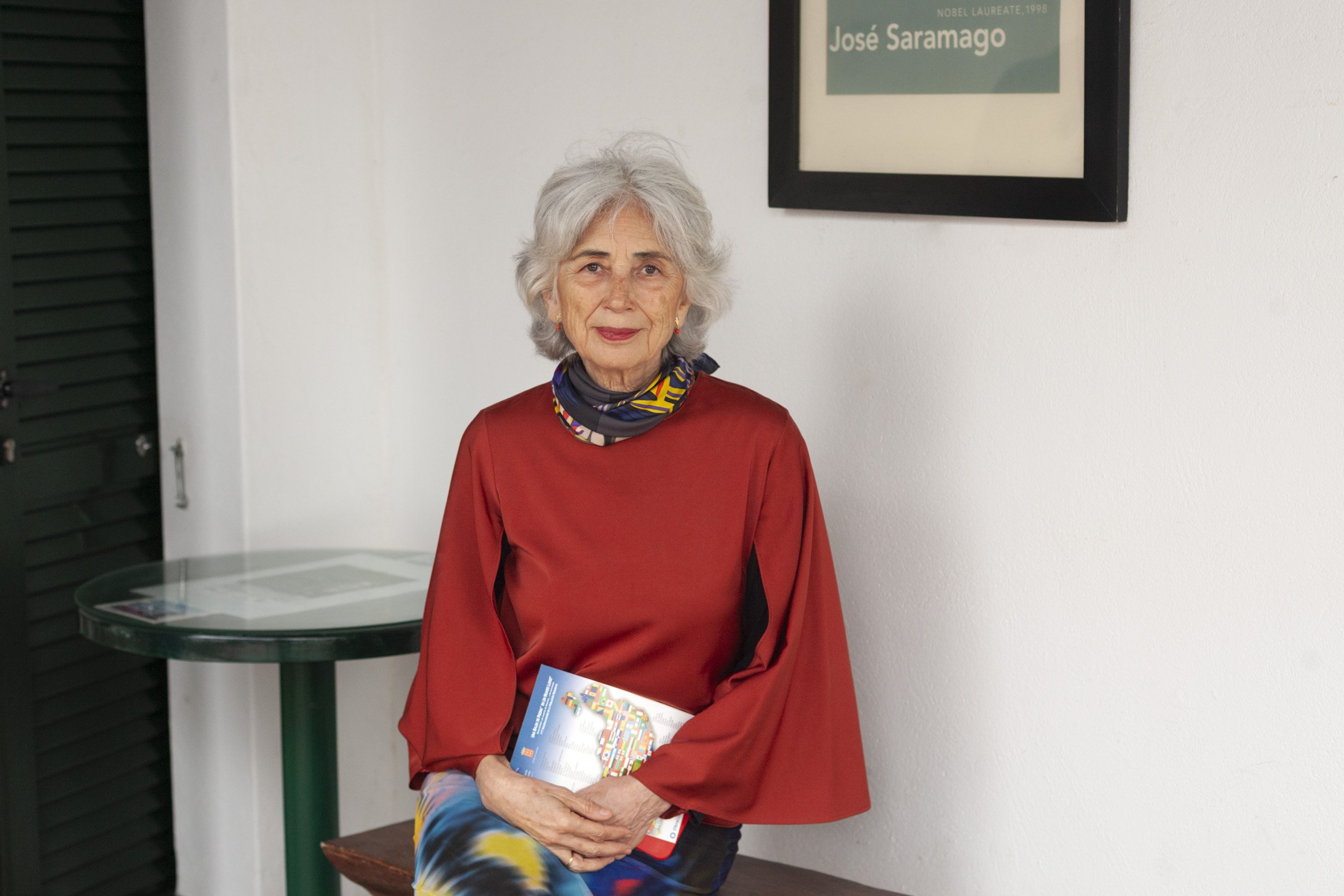
The also translator Pilar del Río reflects on the dangers that current democracies face with the rise of reactionary movements and points out that although formally democracies continue to exist because one can go to the polls, there are political leaders who are provoking "vassalage", by having the population they govern intimidated. "Formally one is voting, but if you are voting for someone who wants to be your master and considers you unnecessary because you are poor, then [democracies] are in danger", she questions.
In this sense, Del Río adds that the concept democracy, which in Greek means the power of the people, is changing meaning. "It is not being governed democratically because it is not being governed by the people, for the people and by the people", he reflects, "it seems that it is overcome, that democracy now means something else".
In the face of collectivism of movements like feminism, the journalist warns that there are forces that propose individualism. "That you be the center and out with the immigrants, the gypsies, the poor, the beggars and the I don't know what," she highlights, "it is not being said let's live and let them have a happy life"..
To combat hatred, war and reactionary movements, del Río praises the strength of movements like feminism and the work of A Casa José Saramago. "Here every day messages of understanding are read, of favoring peace over war. The books from different countries, different languages, different cultures are united. Symbolically it is already a lot; whoever enters here knows they are entering a universe," he concludes.